

Scientists are uncovering the biological mechanisms behind sudden infant death syndrome with the goal of identifying risk and preventing deaths.
By Tyler Santora
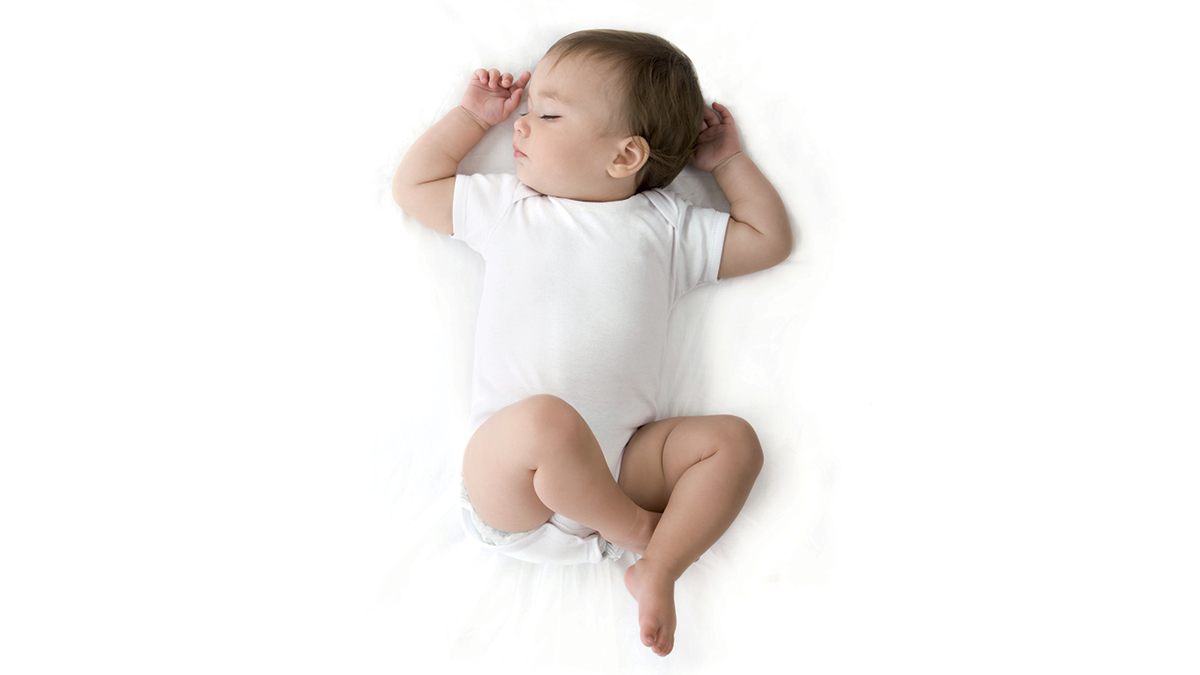
Every year in the United States, about 1,500 infants go to bed but never wake up. These unexplained deaths—many in babies who appear perfectly healthy—are caused by sudden infant death syndrome (SIDS), which kills more children ages 1 month to 1 year than anything else. But scientists are only just beginning to understand what happens physiologically to cause SIDS.
Before the 1950s, experts thought that babies who passed away during sleep died from accidental suffocation. Consensus shifted blame to natural causes in the 1970s, when scientists began researching risk factors related to SIDS. A new era began in 1994 when the National Institute of Child Health and Human Development launched the Back to Sleep public health campaign (renamed “Safe to Sleep” in 2012) to encourage safe sleep in a face-up position to prevent SIDS. Although the campaign halved these deaths, many children still died, and it became clear that SIDS is much more complicated than once believed.
“The common perception was that these were accidental deaths,” says Hannah Kinney, MD, a brain pathologist and professor emeritus at Harvard Medical School. “That view has not completely ended, but there has been a shift toward looking for a vulnerable infant.”
This shift is reflected by the triple-risk model, which was first proposed in 1994 by Kinney. Her colleague James Filiano, MD, later revised it. The model states that three factors must come together for a SIDS death. First, it happens during a vulnerable developmental stage, namely the first year of life. Second, to Kinney’s point, the infant has an abnormality, such as a brainstem defect, that makes them vulnerable to SIDS. Third, there’s an environmental stressor, such as sleeping face-down, which causes a pocket of air that the child rebreathes until their oxygen plummets and carbon dioxide surges.
When rebreathing occurs, there are two points of failure that need to happen for SIDS to occur. First, a baby will stay asleep rather than waking up and changing positions to breathe more easily. The hypoxia causes them to stop breathing and their heart rate to dive. After 20 or 30 seconds, an autoresuscitation reflex should kick in, making the child gasp for air. That gasp is often enough to break the air pocket, fill the lungs with oxygen, and return heart rate and blood pressure to normal.
“If that autoresuscitation reflex fails, then that’s when we get a SIDS outcome,” explains Russell Ray, PhD, a neuroscientist at Baylor College of Medicine and director of the Isabel Davis Center for Safe Children.
What SIDS researchers are trying to discover, then, is why the autoresuscitation reflex fails, which babies are at risk, and what they can do to keep the babies alive.
What Makes a Vulnerable Infant to SIDS
SIDS is not a uniform condition. There are many biological differences an infant can have that make them susceptible, and some are particularly common.
The best understood is a defect in the serotonin system, which controls breathing, blood pressure, heart rate and sleep, says Kevin Cummings, PhD, director of the Dalton Cardiovascular Research Center at the University of Missouri. There are a few ways the serotonin system is affected. First, neurons don’t make and release enough of the neurotransmitter. Second, there are fewer receptors that bind it. Third, the serotonin neurons don’t develop properly and are immature. Animal studies have found that these defects lead to apnea, or halted breathing, and a failure to autoresuscitate, Cummings says.
“These changes are so subtle that you wouldn’t see them on a normal medical exam. But if you use very sensitive molecular methods, you can see that in the brain tissue,” Ray explains. He adds that much of contemporary SIDS research revolves around better understanding how serotonin abnormalities may cause SIDS.
But there’s likely more going on in the brain that contributes to SIDS, at least in some kids. For example, research suggests that there may be excess inflammation and immune cells called microglia in the brainstem, says Peter MacFarlane, PhD, a respiratory physiologist at Case Western Reserve University.
Hypoxia from rebreathing can increase inflammation, which may contribute to dysfunction in the brainstem that causes SIDS, he says. This is supported by the fact that infection has long been tied to SIDS, but more research is needed to unpack the role of inflammation.
SIDS Is Not One Condition
Other risk factors are common only among certain subsets of SIDS infants—because SIDS likely isn’t one condition at all. “I believe SIDS is a heterogeneous group of underlying diseases and there are subgroups,” Kinney says.
One of these subgroups has seizure-related pathology, she explains. Her team has found a subgroup with abnormalities in the hippocampus, an area of the brain where seizures can originate. But researchers are still uncovering whether fatal seizures implicated in SIDS might be caused by hypoxia, or if they’re simply the results of undiagnosed seizure disorders, she says. Genetic mutations tied to epilepsy are found in this subgroup.
Another subgroup has cardiovascular defects, says Nino Ramirez, PhD, director of the Norcliffe Foundation Center for Integrative Brain Research at Seattle Children’s. These infants have genetic mutations tied to cardiovascular problems, such as sudden cardiac death and Brugada syndrome, a rare heart condition that causes arrhythmia in the ventricles. A baby with these mutations could have a fever that triggers excess calcium to enter the heart, which then fibrillates and arrests. Or if the child becomes hypoxic after rebreathing, the body may release too much norepinephrine and cause cardiac arrest, Ramirez says. The exact physiology, like with all SIDS cases, is unknown.
In the past, SIDS deaths weren’t attributed to specific disorders like this, but that’s beginning to change. “Sudden infant death syndrome is turning from a disease of exclusion—if the pathology finds nothing, you say this is SIDS—to now you say this was a child that died of sudden cardiac arrest or sudden epilepsy,” Ramirez says. “It’s turning from SIDS to an explained disorder.”
Much of the evidence for these SIDS subgroups comes from Ramirez’s work identifying genetic mutations common among SIDS infants. “We didn’t have proof until we had genetic sequencing for these babies,” says Savannah Lusk, PhD, a neuroscientist at Baylor College of Medicine and co-director of the Isabel Davis Center for Safe Children.
But still, genetic studies only show correlation, not if or how they cause death. “In many cases, you can see changes in the infant’s genome that strongly suggests those mutations are likely to be pathological,” Ray says. “But what that means for the infant’s physiology having that non-functional protein, whether the protein becomes toxic or just doesn’t work, is still unclear.”
Ray and Lusk are investigating the effects of SIDS mutations using mouse models. But rather than taking the typical approach of modeling one mutation at a time, “we’re combining different features together to create a more comprehensive model,” Ray says. For instance, other researchers found through blood testing that SIDS infants have less of an enzyme called butyrylcholinesterase, which plays a role in arousal.
Ray’s team created a mouse model lacking the enzyme but found no adverse effects. They’re now testing the mouse model by exposing it to commonly used neurotoxic pesticides that butyrylcholinesterase typically breaks down to see if the two may interact to trigger a SIDS-like outcome. “Once we can develop models that are comprehensive in mimicking the very many aspects of SIDS, we can start to validate hypothetical concepts that have been around for a while that, again, are largely hypothetical,” MacFarlane says. “That also allows us to explore new mechanisms, which can start opening up avenues for developing biomarkers for early identification of infants that are at risk of SIDS.”
Genetic and Blood Biomarkers
Before they can prevent SIDS, experts must know which babies are at risk. Researchers have recently made great strides in identifying biomarkers that will hopefully soon reveal these children so they can be monitored more closely during sleep—and potentially be given interventions that reduce the risk of death.
One way to do this is through genetic testing. Ramirez is currently working on prenatal screening for mutations that increase the risk of sudden cardiac death and sudden death from epilepsy. There are already medications available for some of the conditions, he says, which could be prescribed to these infants. Even if universal genetic testing is too difficult to implement in the near-term, sequencing could be an option for determining whether the siblings of SIDS infants are similarly at risk.
Easier than genetic testing, however, may be screening for blood biomarkers. Several labs across the U.S. have identified potential SIDS biomarkers in blood, including hormones, enzymes and metabolites that are either higher or lower in SIDS infants compared to typical children. Although this work is in the early stages, there are several promising options that may one day help doctors identify at-risk babies.
The Holy Grail: Preventing SIDS
“The holy grail of SIDS research is to find a drug or behavioral modification that will prevent sudden death,” Kinney says. “We’re not satisfied until we find something that ends SIDS.”
There is a socioeconomic disparity in SIDS deaths, and safe sleep messaging isn’t getting to the parents who most need it, Lusk says. So, one prevention method is targeting safe sleep education at disadvantaged parents of at-risk babies. “Unless we start changing the social situation, we will never really solve SIDS,” Ramirez says.
Another method is preventive medicine. Ray and Lusk, for example, are using mouse models to test compounds approved by the U.S. Food and Drug Administration that affect the cardiorespiratory system to see whether they benefit SIDS animals. While other researchers may test specific drugs related to the SIDS mechanism they’re studying, Ray’s team is “trying to do this systematically and go through as many drugs as possible,” he says. Already, they have found some that improve function in mice with specific mutations.
One drug used to help pre-term infants breathe is a frontrunner in SIDS prevention research: caffeine. “Caffeine is pretty effective at compensating for defects in the serotonergic system, at least in animals,” Cummings says. “You give them caffeine, and they can survive the hypoxia that would normally kill an infant animal that has reduced serotonin.” He’s not sure why, but it may be because of effects on serotonin, or because it’s a stimulant that blocks inhibitory molecules’ effects on the cardiorespiratory system. Although promising, research is still in an early phase, and experts are pushing for a clinical trial that hasn’t yet been funded.
This article was originally published in the January 2026 issue of The Physiologist Magazine. Copyright © 2026 by the American Physiological Society. Send questions or comments to tphysmag@physiology.org.
“Before they can prevent SIDS, experts must know which babies are at risk. Biomarkers will hopefully soon reveal these children so they can be monitored more closely during sleep.”
The Physiologist Magazine
Read the Latest Issue
Don’t miss out on the latest topics in science and research.
Contact Us
For questions, comments or to share your story ideas, email us or call 301.634.7314.
The Challenges of Studying SIDS
For physiologists, there’s a major and tragic hurdle to studying SIDS: “Because this is a diagnosis after death, we’re not looking at physiology anymore by the time we see these post-mortem babies,” Savannah Lusk, PhD, says. “Physiology is the processes of life. Life is done.” The closest researchers can get is studying animal models, but they are far from perfect.
Studying tissues from infants who died from SIDS can help figure out what causes it. Sometimes this means blood samples taken before death, but researchers also need post-mortem samples. Obtaining the latter is very difficult. “A parent has just lost a child suddenly and unexpectedly, and within 12 hours we have to try to get permission from them to collect tissue,” Russell Ray, PhD, says.
To study the role environmental contributors play in SIDS, researchers like Lusk also need details such as the temperature in the room when a child dies, or whether the baby had been given melatonin. But death scene investigators often don’t know to collect this information, she says.
Of course, funding is one of the biggest limitations. “It is the most underfunded child disease that I know of,” Ray says. Sleep-related infant deaths kill nearly fourfold more children than pediatric cancer every year, yet receive a fraction of the funding.
This funding for research, and interventions, is likely to be more challenging to attain in the future: The Trump administration shut down the National Institutes of Health office that runs the Safe to Sleep program—a move experts believe will lead to a rise in SIDS deaths.