

Patricia Molina reflects on her path from physician to APS president and why representation, service, and whole body physiology matter.
By Mike De Socio
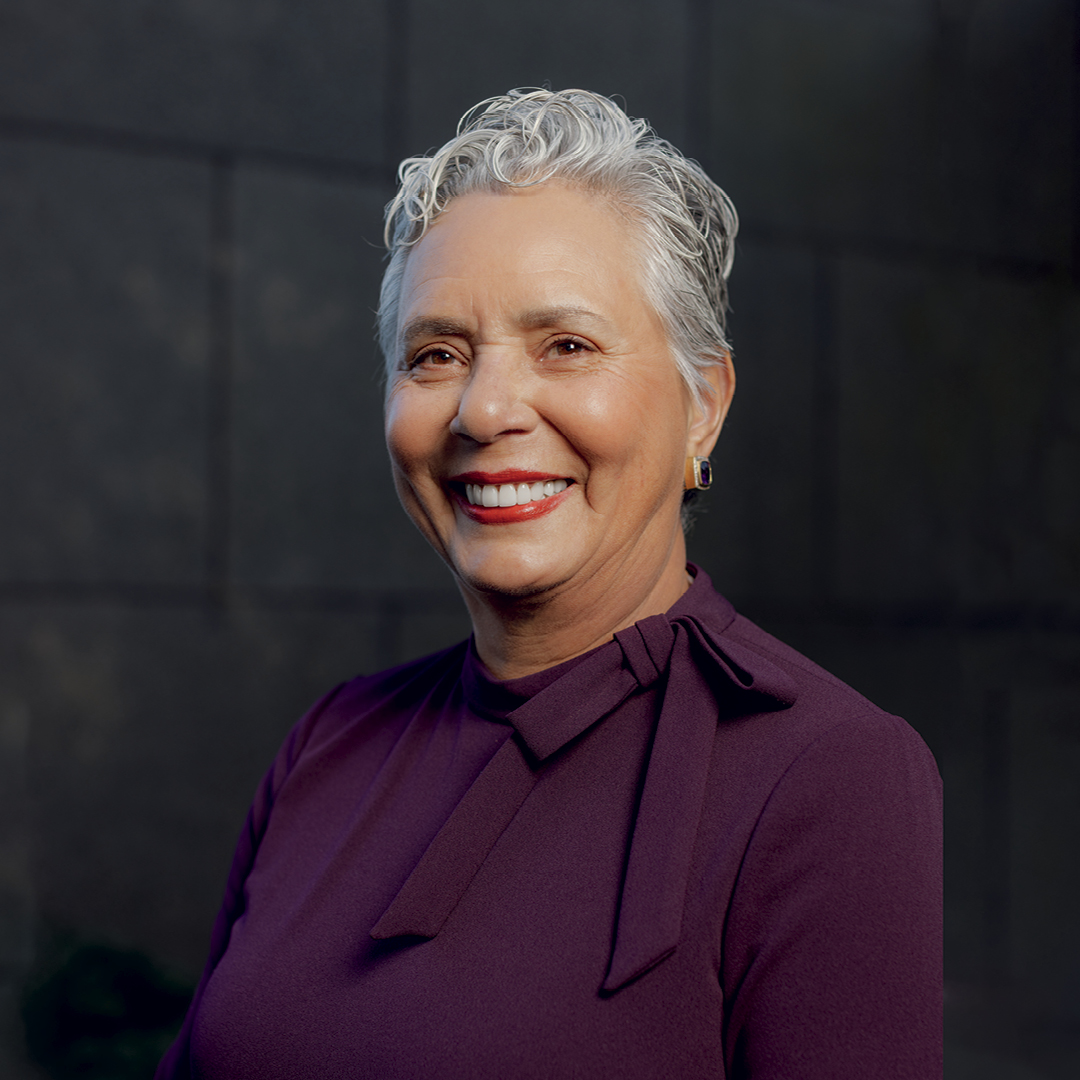
In the late 1990s, Patricia E. Molina, MD, PhD, FAPS, found herself feeling lonely during a critical transition in her career. She had relocated to New Orleans with her family, but she was super-commuting twice a month to her lab at the Brookhaven National Laboratory in New York. With her professional life geographically scattered, Molina was yearning for a place to belong.
She turned to two of her colleagues active in APS to help her get more involved. “You guys need to get me on a committee at APS,” she told them. “I need to get involved so that I can feel that I belong to something.”
Molina’s two friends suggested she join the Women in Physiology Committee, an idea she initially resisted. “I want something else,” she told them. “I want to do something, but not because I’m a woman.”
Instead, she drew on her experience as an immigrant and joined the International Committee. But now, 25 years later, she realizes her reluctance to engage with the women’s committee reflected her lack of understanding in the importance of its work.
In 2015, when Molina was elected APS president, she became the first Hispanic woman to serve in the position. During her term, she began to fully grasp the power of representation. “I didn’t realize that people were so hungry to see a brown Latina woman up on the podium,” she says. “I did not realize how necessary that was.”
At meetings, colleagues repeatedly approached Molina to share what it meant to them to see someone like her serve in the Society’s highest leadership role. She eventually lost count. “Somebody’s life was impacted” by that representation, she says. “Somebody’s hope was impacted, and to me, that’s incredibly valuable.”
A Lifelong Passion for Medicine
Molina’s experience as APS president came decades into an academic career that has taken her across disciplines and across the world. She was born and raised in El Salvador, in a family that placed a high value on education. She attended a bilingual school and became fluent in English. “[I had] very, very strict parents who expected me to do well in every single subject. And I did. I was a very good student,” Molina says.
When she finished high school, she pursued her lifelong dream of becoming a pediatrician. “I just wanted to be a doctor so badly. I wanted to take care of things, of people,” Molina says. As a child, she would often take care of animals, and she had her heart set on a life helping people in need.
She carried that drive to medical school where, during her fourth of six years, she married a classmate. Molina had her first child right as she was finishing her last internship rotation. The transition was difficult. “I struggled after my child was born. I felt I was not ready to leave him at home or in a daycare,” she says. Molina finished the requirements for her degree before deciding to focus fully on caregiving.
At the same time, some of her mentors and classmates encouraged her to stay connected to medicine. Their conversations led to an arrangement with faculty at the medical school: working two hours a day helping students plan their research and write their theses.
It was during this time that Molina received a visit that would help shape the course of her career. A friend from medical school was now pursuing a PhD in the U.S. While traveling home to Guatemala, she stopped to visit Molina, and the two had a candid conversation about Molina’s career.
“What are you doing? What’s next for you?” the friend asked.
“I don’t know. I mean, this is what I’m doing right now. I’m helping medical students write their thesis,” Molina replied.
“No,” her friend said. “You went to medical school to be a doctor. You don’t know how to do research. If you want to learn how to do research, and if this is something that you like, you need to do a PhD.”
Her friend helped her with the application for the University of South Alabama. “And one day I just got this packet saying, you have been accepted to the graduate program,” Molina says. “I was like, ‘Oh my God.’ I didn’t know what I was getting myself into. And so that is how my professional life took such a sharp turn.”
Research that Spans the Whole Body
Molina relocated and joined the physiology department at South Alabama, focusing her research on the cardiovascular system. After a year, she transferred to Louisiana State University (LSU), where she began to research the impact of alcohol in the body, specifically how alcohol intoxication affects metabolism. Her dissertation asked how energy in the cells might get disrupted by alcohol, potentially inhibiting the body’s ability to fight infections.
This focus on energy metabolism “brought me into the field of not focusing on one particular organ but looking at the whole body,” Molina says. “It is something that I feel has distinguished me from many of my peers, and it is something my training as a physician set the stage for me to be able to do that.”
Molina has now been doing research into alcohol’s effects across the body for three decades. The work has important clinical implications. Less than 50% of physicians or health care providers ask people about their drinking habits, according to Molina, despite the fact that about 60% of the U.S. population drinks alcohol. “Here you have a substance that is being consumed by a large majority of our population—in excessive amounts by about 20% to 30% of our population—yet in a clinical setting, it’s not really thought about unless it shows up in liver function tests.”
But it’s not just the liver that clinicians should be worried about. “Every single system in our body is impacted by alcohol,” Molina says. “In some systems, we can ride it out. But there are some systems that are way more susceptible, and there are some systems that you don’t even think about.”
For example, one of the organs most frequently affected by excessive alcohol use is muscle: Well before a person shows any signs of liver problems, they might have issues with skeletal muscle or losing muscle mass, according to Molina.
A Moral Obligation to Give Back
Molina now serves as Richard Ashman Professor, department head and senior associate dean of research at the LSU School of Medicine. Though her research hasn’t directly supported a pharmaceutical intervention, she sees value in the basis of information and knowledge she has generated on the topic. It’s even more impressive when you consider how Molina’s research was nearly wiped out when Hurricane Katrina hit New Orleans in 2005.
The effect was stark. Her lab’s pre-clinical studies were canceled. Because they lost access to their building for months, everything in the freezers thawed and became unstable. They lost their reagents. Not to mention, systems were down, making it almost impossible to communicate.
This is another moment when APS played a critical role in Molina’s life: After the hurricane, the Society helped reestablish lines of communication, waived membership fees, provided travel awards so trainees could attend the annual conference and invited speakers who would boost morale.
“I felt so valued. I felt that there was somebody out there that knew what we were going through and that they were not going to let us be forgotten,” she says.
The contrast with her experience in another professional society was striking. She recalls a meeting in which a participant mentioned a drop in research posters being submitted that year. Molina pointed out that the organization had a strong contingent at LSU, which was still recovering and rebuilding from Katrina.
“The response caught me off guard,” Molina says. “Someone said, ‘But it’s been six months.’ I almost had tears in my eyes. I remember thinking, ‘You have no idea how we have survived.’ At that point, we were not even back in our building.”
The experience highlighted just how much the support from APS mattered to Molina—and why it cemented her dedication. She calls it a “moral obligation” to give back. Over time, that commitment translated into service. She went on to chair committees, was elected to the Council, and eventually became president. She’s proud of several accomplishments from her time as president, including diversity initiatives. But still, what remains in Molina’s mind was the power of her visibility.
“What mattered most was recognizing my responsibility as a role model,” she says. “Not because I’m so extraordinary, but because I don’t fit the traditional image people associate with leadership in science. Seeing someone like me up there helped others believe, ‘If she made it, maybe I can, too.’”
This article was originally published in the March 2026 issue of The Physiologist Magazine. Copyright © 2026 by the American Physiological Society. Send questions or comments to tphysmag@physiology.org.
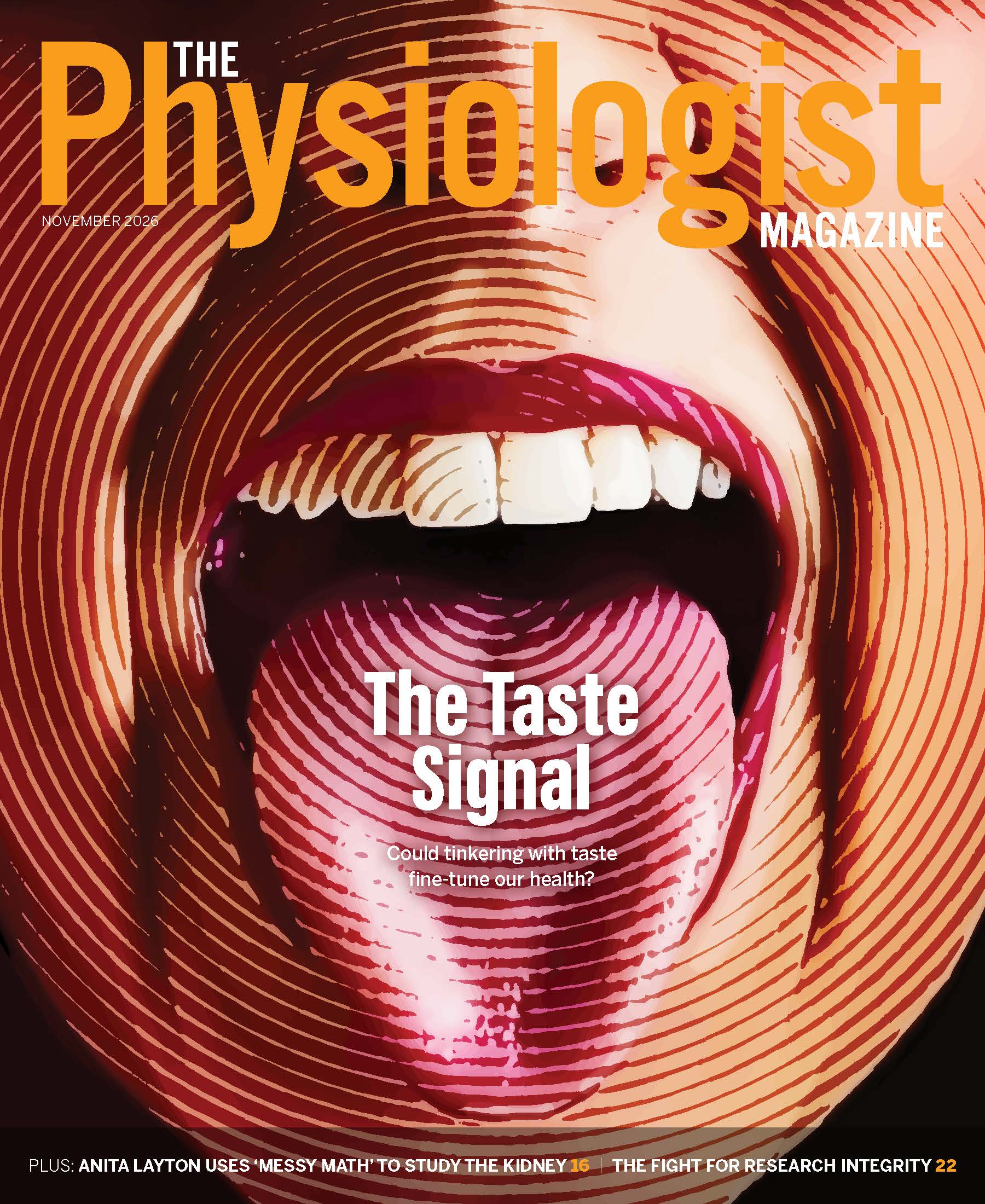
The Physiologist Magazine
Read the Latest Issue
Don’t miss out on the latest topics in science and research.
Contact Us
For questions, comments or to share your story ideas, email us or call 301.634.7314.
6 Questions with Patricia E. Molina
Best career advice: Find your passion and use your talents to take you on a lifelong journey. Be persistent and optimistic.
Tips for physiologists to talk about physiology: Use simple words. Use analogies or situations that all have experienced or witnessed to highlight the importance of understanding physiological systems.
Favorite thing about New Orleans: The city and its people do not allow me to feel like a foreigner. The warmth and laissez-faire approach to life nurtures my soul.
Favorite place in the world: So many places I have gone back and would go back again. But to get away, nothing beats an evening on the terrace of our home in Antigua, Guatemala. It is paradise on Earth.
Your message to physiology students or early-career scientists: APS has been my scientific home, my scientific environment and the place where I can always come back and affirm the importance of the discipline in my teaching and in my research. Students and early-career scientists looking for a place to belong should look no further than APS. Whether to learn, be mentored, grow or serve, there is a place for you and a community dedicated to support your path.
What else should we know about you? I love to dance, sing, cook, read, exercise and travel.