

How Researchers Are Working to Understand and Stop Sepsis
Sepsis kills 30% to 40% of its victims and is the leading cause of death in children worldwide. Here's what physiology researchers are doing to stop it.
By Isobel Whitcomb
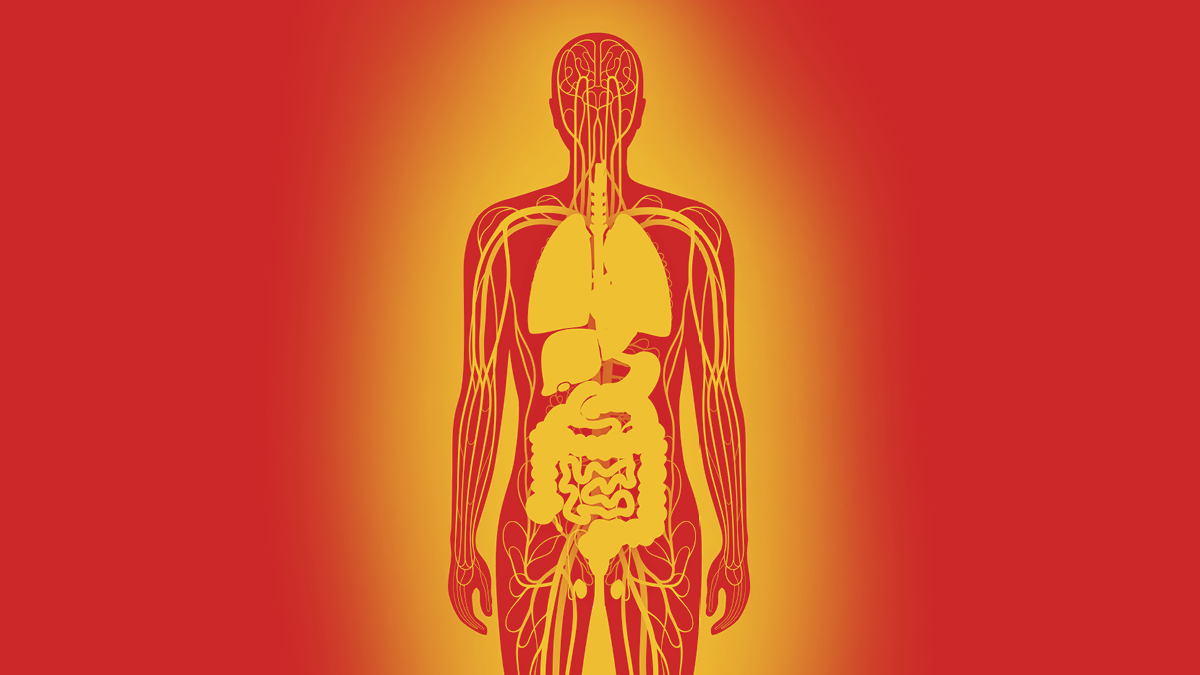
It begins with an assault to the body. Perhaps a bacterial infection: A burst appendix leaks bacteria throughout the abdominal cavity, or a urinary tract infection travels to the kidneys and enters the bloodstream. But it’s not always that clear-cut. Sometimes, the infection is viral, parasitic or fungal. Sometimes, there’s no infection at all—just an injury.
In response to the initial insult, the immune system launches its defense. Neutrophils and macrophages engulf invading pathogens and foreign debris. They release an arsenal of inflammatory mediators. Some of these chemicals dilate blood vessels and increase their permeability so that white blood cells can slip through. Others are toxic to invaders.
Ideally, the immune response works properly. The body clears the threat, and immune cells release inhibitory proteins and lipids to stop the inflammation. But sometimes, the response never slows. Those toxic chemicals, meant to kill invaders, fail at their job and instead turn against the body. The result is sepsis.
Colloquially called “blood poisoning,” sepsis was once defined as an infection that had spread to the bloodstream. That explanation gets it only partially right. While sepsis does usually result from an infection, scientists now realize that the real cause of sepsis isn’t the pathogen itself, but the body’s response to it.
As the immune system spirals out of control, it floods the body with inflammatory chemicals that damage blood vessels and organs. Often, that hyperinflammatory phase is followed by a crash, leaving the body vulnerable to both the primary and secondary infections.
In severe sepsis, organs begin to shut down one by one—most commonly beginning with the lungs. In septic shock, which is the most advanced and dangerous stage of sepsis, blood pressure drops catastrophically, leading to death in 30%–40% of cases.
“Think of the immune system like a car,” says Antonio De Maio, PhD, a professor of surgery at the University of California San Diego. “You accelerate, but at the same time, you need to use the brakes because too much inflammation is bad.”
In sepsis, the brakes fail. Physiologists are working to figure out why this happens, develop treatments to rein in runaway inflammation, and improve quality of life for survivors.
A Multifactorial Syndrome
It’s been nearly four decades since scientists first came to a consensus on the role of the inflammatory system in sepsis. Despite advances in their understanding of the condition, treatment consists entirely of supportive care. Regardless of whether a patient has a positive blood culture for sepsis, all patients receive antibiotics to treat any underlying infection and to get ahead of other infections that may emerge during immunosuppression. Patients may also receive fluids or medications to support blood pressure, ventilation when the respiratory system fails, or dialysis when the kidneys fail.
There have been many attempts to develop drugs that directly counter inflammation in sepsis, but none have successfully resolved it. Immunologist János G. Filep, MD, PhD, calls this lack of progress in treatment a “unique failure.”
The problem is that the physiology of sepsis likely varies from person to person, with inflammation driven by many molecular pathways and feedback loops, says Filep, who directs the Innate Immunology and Vascular Immunology Research Unit at the University of Montreal. For example, free radicals produced by white blood cells wreak havoc on organs and the immune system, altering DNA and accelerating inflammation. Nitric oxide floods the body and binds with those free radicals to produce compounds that destroy the lining of blood vessels. Meanwhile, the exaggerated immune response demands tremendous amounts of oxygen—oxygen that would otherwise support organ function.
Another potential driver of inflammation in sepsis, Filep says, is the mitochondrion. “The mitochondria are, in fact, ancient bacteria,” he says. Hundreds of millions of years ago, these bacteria lived in symbiosis with our eukaryotic ancestors, generating energy for us. Although mitochondria are no longer independent organisms, they still contain DNA that closely resembles that of bacteria. If damaged mitochondria release their contents, Filep says, the immune system may mistake them for pathogens. Filep’s lab found that fragments of mitochondrial DNA can alter the behavior of immune cells, both weakening their ability to fight bacteria and causing erratic signaling.
Because of this variability—in the drivers of inflammation, the initial insult, the patient’s genetics and more—developing a targeted treatment for sepsis is like a game of Whac-A-Mole. “If you’re looking at the clinical appearance, it’s straightforward,” Filep says. “But are we really looking at the same disease with the same molecules driving it? I tend to believe not.”
The Golden Hour
Better outcomes for sepsis aren’t just about finding the right treatment; they also depend on speedier diagnoses. Treating sepsis is a race against the clock. A retrospective study of 35,000 patients found that for every hour in which antibiotics are delayed, sepsis patients had a 9% higher risk of dying.
De Maio has identified a “golden hour,” an early window in sepsis when treatment is most effective—during the initial hyperinflammatory phase, before the immune system collapses. He and his colleagues produced sepsis in mice and then removed the source of infection at different time points. When the scientists intervened within six hours, 80% of the mice survived; when they intervened later, survival dropped to less than 40%. Inflammation closely tracked these outcomes, peaking at six hours before rapidly declining.
More recently, De Maio tested the golden-hour hypothesis using a new therapy: hyperbaric oxygen, which delivers 100% oxygen inside a pressurized chamber. “This allows us to deliver oxygen fast to every single organ,” he says. The hope was that improving oxygen delivery might reduce tissue damage and the ensuing inflammatory cascade. The results, published in 2019 in the American Journal of Physiology (AJP)-Regulatory, Integrative and Comparative Physiology, found that about half of mice treated an hour after sepsis onset were still alive three days later. “But if it was done late, there was no recovery,” De Maio says.
The problem is that sepsis can be difficult to spot early on, says Cuthbert Simpkins, MD, the Sosland-Missouri Endowed Chair in Trauma Services at the University of Missouri-Kansas City School of Medicine. Sepsis’s symptoms are wide-ranging and non-specific: fever, disorientation, lethargy, shivers, perhaps a cough. “A lot of things cause fevers; a lot of things cause a cough,” Simpkins says.
He remembers a patient coming into the emergency department (ED) acting erratically. A frequent visitor to the ED, her behavior was familiar to staff. Simpkins thought she was in a mental health crisis. But she had sepsis. Simpkins was an intern at the time and “too inexperienced” to recognize her condition, he says. One of his superiors spotted sepsis and began treatment immediately. With prompt care, the patient survived.
Life After Sepsis
When a patient survives sepsis, their fight doesn’t end at discharge. The consequences can be lifelong: depression, impaired cognition, reduced mobility and a compromised immune system, says Orlando Laitano, PhD, a skeletal muscle biologist and exercise physiologist at the University of Florida.
Laitano’s research focuses on the long-term impacts of sepsis on what he calls “the forgotten organ”: skeletal muscle. “For many years, we didn’t know about the physiology of muscles in sepsis survivors,” he says. So Laitano began asking physical therapists what they were seeing in sepsis survivors. “They told me these patients don’t tolerate exercise.” Rather than growing stronger with rehabilitation, many became weaker.
To investigate, Laitano mimicked intensive care unit conditions in septic mice. He induced sepsis and simulated bed rest in the mice, a method he initially characterized in Physiological Reports in 2021. The researchers then compared these mice to a healthy group who were also immobilized. Their results showed that while both groups experienced similar muscle atrophy, sepsis survivors had significantly greater weakness—even after controlling for muscle size.
The team hypothesized that while disuse probably played a major role in degeneration, something else was likely going on in the muscles of the sepsis survivors. In earlier work, they identified epigenetic changes in satellite cells—the immune cells responsible for muscle repair—in mice following heat stroke. (Laitano has found that sepsis is a common complication of heat stroke and is often what leads to death.)
These epigenetic changes were likely caused by the “absurd” amount of free radicals released during sepsis, Laitano says. “After sepsis, the satellite cells proliferate some, but don’t fully engage in the repair cycle,” he says. In other words, while healthy muscle responds to stress by growing stronger, the muscles of sepsis survivors continue to break down.
Laitano has found that 75% of patients experience abnormal muscle function after sepsis. This loss of strength leaves them extra vulnerable to falls and rehospitalizations—and each hospitalization increases the risk of a second bout of sepsis due to their already-dysregulated immune systems.
While Laitano hasn’t identified avenues to restore normal muscle function in sepsis survivors, his research does point to a simple intervention to improve survivors’ quality of life post-discharge: Keep patients moving. His lab is currently exploring early mobility and electrical stimulation to preserve strength. “What you want is to slow down the rate of atrophy and weakness so that if the patient survives, they’ll have some level of function that’s compatible with daily activities,” he says.
The Future of Sepsis
Insights into sepsis physiology are beginning to translate into real interventions. In Phase 2a clinical trial findings, a team led by Simpkins tested a new drug that redistributes blood concentrations of nitric oxide, a gas that contributes to vascular and organ damage in sepsis. Twenty patients with severe septic shock were given the drug; all experienced increased blood pressure within 90 minutes and improvement in the function of multiple organs within 48 hours. This allowed for a decrease in the dose of vasopressors, a drug given to patients in septic shock that elevates blood pressure but that can have life-threatening complications. In the end, survival was greater than expected based on the severity of their condition.
Meanwhile, researchers are finding other potential avenues for therapy, including specialized pro-resolving mediators, which are lipids mainly produced by dietary omega-3 polyunsaturated fatty acids that help the body fight infection and return to baseline levels of inflammation. “These could be a game-changer in sepsis management,” Filep says.
Researchers at the University of California San Diego Department of Emergency Medicine have developed an artificial intelligence (AI) algorithm that monitors patients for sepsis using 150 different variables, including lab values, vital signs, demographics and medical history. In a 2024 study, the team tracked the outcomes of 6,000 ED patients before and after deploying the AI tool. The algorithm resulted in a 17% decrease in deaths.
Sepsis outcomes are gradually improving, says Christopher Gayer, MD, PhD, chief of the Division of Pediatric Surgery at Children’s Hospital Los Angeles. Forty years ago, only 20% of people with septic shock survived. Today, survival approaches 70%, but it still remains the leading cause of death in children globally. Better screening, imaging, a wider array of antibiotics and awareness about the importance of early diagnosis and intervention with IV fluids to improve blood volume are starting to make a difference, Gayer says.
Gayer is hopeful gains will still be made. “If you can treat it a little bit better, diagnose it a little bit earlier, have some better tools to support people while they’re getting treated, that can be enough to tip the balance in favor of overcoming this.”
This article was originally published in the May 2026 issue of The Physiologist Magazine. Copyright © 2026 by the American Physiological Society. Send questions or comments to tphysmag@physiology.org.
The Physiologist Magazine
Read the Latest Issue
Don’t miss out on the latest topics in science and research.
Contact Us
For questions, comments or to share your story ideas, email us or call 301.634.7314.