

Physiology Careers in Industry: What You Need to Know
Physiologists who've built careers in biotech, pharma and beyond share advice on networking, corporate culture and redefining success.
By Deborah Lynn Blumberg
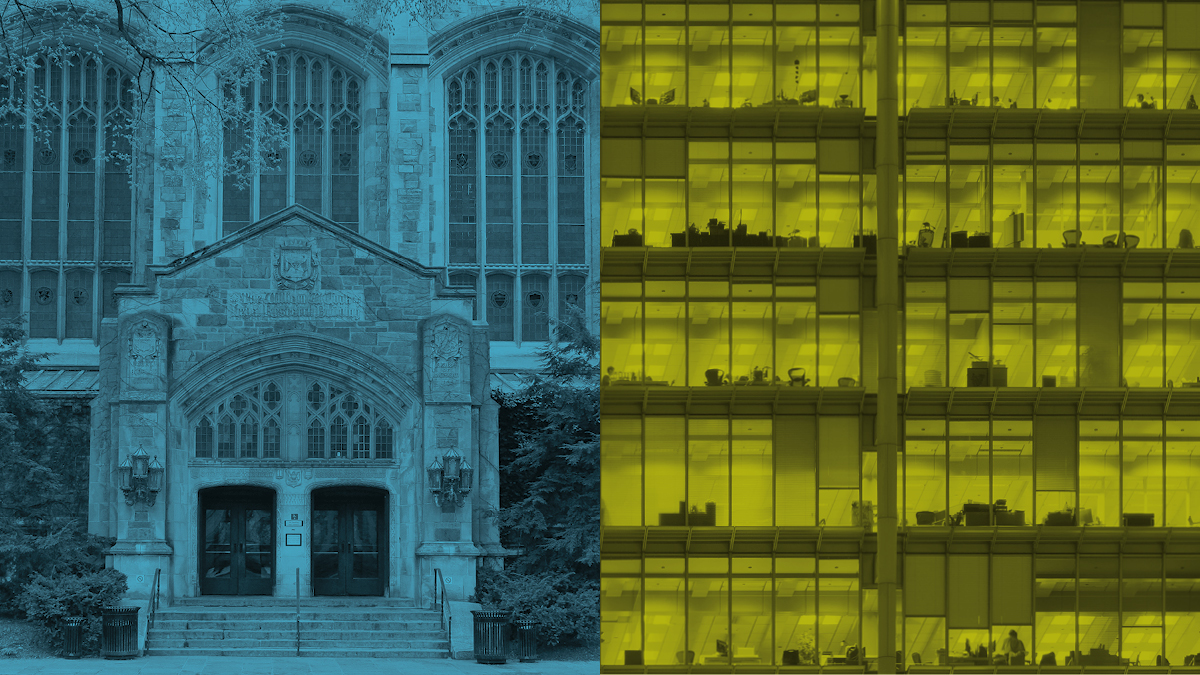
For physiologists in industry, the science is rarely the hard part. It’s everything else. Compared to academia, the job titles are unfamiliar, the definitions of success are different, and corporate cultures don’t run on publications and grant cycles. Industry careers demand the same qualities that make a good scientist, such as critical thinking, rigor and adaptability, but the environment operates on different terms. Whether an individual is arriving straight from graduate school or after years in academia, the learning curve isn’t scientific.
The numbers reflect the growth. National Science Foundation (NSF) data show nearly half of recent PhD recipients across science and engineering fields take their first job in industry—in biotech, pharma and medtech, in roles ranging from medical science liaison to product development and strategy.
NSF data show roughly 70% of PhDs never enter the tenure-track pipeline or leave it within nine years, while about 65% of those who start their careers in for-profit research are still in that sector a decade later. Yet training programs that narrow the gap between academic training and industry expectations are slow to catch up and remain fragmented across sectors, leaving many researchers to navigate the landscape largely on their own.
Scientists who’ve done exactly that share what they’ve learned about networking, navigating corporate culture, redefining success and building a career without a fixed plan to follow.
A Different Path
Michelle King, PhD, knew early in her career that she wanted to conduct research with real-world applications. After completing her postdoc at the U.S. Army Research Institute of Environmental Medicine, she joined the Gatorade Sports Science Institute—a natural fit for an endurance runner who’s studied exertional heat stress and heat stroke. “I knew I wanted to do research in an environment that drove consumer goods,” she says. King has also held industry roles at Unilever and most recently was senior principal scientist for Kraft Heinz.
For Lara DeRuisseau, PhD, MBA, the pivot to industry came after 15 years in academia. She was publishing, teaching and tenured at Le Moyne College in New York state, but she was increasingly drawn to a question she couldn’t answer from a faculty position: What are the broader ways she could help the patient population? Interested in the interaction between business and physiology, in 2020, she enrolled in a part-time MBA program.
Last year, she joined Eli Lilly as an associate director, neuroscience medical science liaison, where she educates clinicians and scientists on Alzheimer’s disease. “In academia, we’re often told tenured positions are so hard to find, why walk away? But I felt it was time for a new chapter.”
Bryan Wilson, PhD, MBA, pursued a joint PhD-MBA degree at Wake Forest University with industry in mind, but knowing where his education might take him in his career was a challenge. “I didn’t know the best role for me in crossing over into industry,” he says. “It took a while to find the right fit.”
After starting at Merck as an associate director medical science liaison supporting the cardiometabolic medical affairs division, he’s now a regional medical director for rare disease at Genentech, covering half of the U.S.
The Power of Networking
Networking looks different depending on where you are in the search for an industry role. For King, it was a mentor who spotted a Gatorade job listing during her postdoc and passed it along. “Your colleagues are your best network,” King says. “Share your interests and your goals—you never know who is paying attention.”
DeRuisseau turned to LinkedIn, seeking out PhDs already working in roles she was curious about and asking them for informational calls. “The more connections I made, it got easier,” she says. “People were so generous with their time and willing to talk.”
Wilson advises putting yourself where the action is: Attend industry conferences. Talk to exhibitors. “You have to have this exploratory, grit-like mentality that enables you to truly put yourself out there,” he says. “Focus brings confidence.”
Building an active presence on social media can help forge connections, says Cassie Briggs, PhD, who founded and runs Success in Science Career Coaching. Briggs is a STEM coach who guides students and early-career scientists as they explore a wide array of science career possibilities. A former self-described die-hard academic, Briggs left a faculty position as a biology professor to become an entrepreneur.
When Briggs began exploring her career switch, she took full advantage of social media, setting a goal of talking to 10 career coaches a week that she found through LinkedIn. Online interactions should be about getting to know people, their struggles, what they need help with, what their goals are, she says. “It helps you stay in touch with what’s going on beyond your own circle.”
Briggs says consistency and timing are key to building a network. She recommends for every hour spent applying to jobs, spend an hour networking. Those connections are critical, she says, because a portion of hires comes from personal referrals. “The strongest networks are built before the job search begins and they continue long after the job is secured.”
Learning the New Rules
While the scientific skills transfer, the industry culture can take longer to learn. Career ladders are not as clearly defined as they are in academia, titles vary widely across companies, and organizations can reorganize with little to no warning. “Flexibility is key,” Briggs says.
One adjustment that catches many scientists off guard is that visibility matters in ways it didn’t in academia, which is why social media such as LinkedIn is so important.
Recruiters and hiring managers actively search LinkedIn profiles, Briggs says. “You want to be discoverable. Optimizing your profile is really important.” That means making sure your LinkedIn headline includes the keywords people would use to find someone with your expertise, she says. Choose a banner image that reflects the direction of your career, not just something that looks attractive. Add the pronunciation feature for your name so that people feel more comfortable reaching out. And use your “About” section to clearly explain who you are now, the experience that shaped you, and where you’re headed, ending with a simple invitation to connect.
For King, one of the learning curves has been communicating science to executives who don’t have a research background. “Your job is to help them understand why what they’re asking isn’t the best question, or to say, ‘OK, we can test this,’” she says. “You have to put on your critical thinking hat.” She’s also found the cross-functional collaboration in industry—working with marketing, product development and other teams—to be a fulfilling aspect of the role.
DeRuisseau was surprised by how seriously her company invests in employee development. At quarterly meetings, individual goals are set, with coaches available to employees to work toward achieving those goals. The company also provides annual training courses and has funds for individual professional development.
“Career development is a major part of performance management and how we progress within the company,” DeRuisseau says. She and King both advise: Don’t chase titles. Chase the opportunities that build the skills you want.
Measuring Professional Success
In academia, success is largely evaluated by publications and grant funding. In industry, success is judged by execution and results. For academics moving to industry, this shift often requires recalibrating what success looks like and how it’s measured.
“For me, it’s really about, are you proud of the work you’re putting out every day?” King says. “Are you producing good work? It’s about showing the business the experiment you ran or clinical trial you did and demonstrating your productivity and that your work has value.” That can also mean helping executives make that connection themselves.
For DeRuisseau, success means reducing clinical care gaps and getting medical information to providers faster.
For Wilson, it’s about influence. “What defines success from a medical standpoint is your ability to interact with stakeholders, influence standards of care, and influence clinical decision-making in unbiased ways to ensure patient access to the right medications at the right time,” he says.
Briggs says she sees a reorientation around the definition of success in nearly every researcher she coaches. “As an academic, your values are knowledge, credibility and recognition,” she says. “In industry, it’s about efficiency, innovation, scalability and return on investment.”
The metrics aren’t better or worse; they’re just different. Scientists who make the transition successfully are the ones who can hold both sets of values and know which one the moment calls for.
Long-term Career Planning
Industry careers may not follow a straight line, and physiologists who thrive in them understand that. King focuses on goal setting. One of her more deliberate choices has been keeping a foot in academia by teaching as an adjunct. “Students ask the best questions,” she says. “They’re always so in touch with what’s going on in the media and in current events, and that helps keep you fresh and sharp,” she says. For King, the two worlds complement each other.
To continue developing in his career, Wilson leans into formal leadership development, completing executive training through McKinsey & Company, the Center for Creative Leadership, and the Columbia School of Business. “It was great to see how these really strong leaders navigated their careers and made a name for themselves,” he says.
Briggs sees adaptability in scientists who work in industry. “If you want a fruitful industry career, make sure you can build new skills and that you show your worth,” she says. The rest will follow, including an opportunity to represent the discipline in places scientists never expected to find themselves.
This article was originally published in the May 2026 issue of The Physiologist Magazine. Copyright © 2026 by the American Physiological Society. Send questions or comments to tphysmag@physiology.org.
The Physiologist Magazine
Read the Latest Issue
Don’t miss out on the latest topics in science and research.
Contact Us
For questions, comments or to share your story ideas, email us or call 301.634.7314.