

Physiology Careers Outside Academia
Five physiologists reveal where their scientific training has taken them.
By Brian Busenbark
Most physiologists train for one destination: academia. But according to the National Science Foundation, about 70% of PhDs never enter the tenure-track pipeline—or they leave it within nine years. The path most prepare for is not the path most take. Five physiologists share what they found when they followed a different route.
GOVERNMENT
A reluctant departure turned into a renewed sense of purpose.
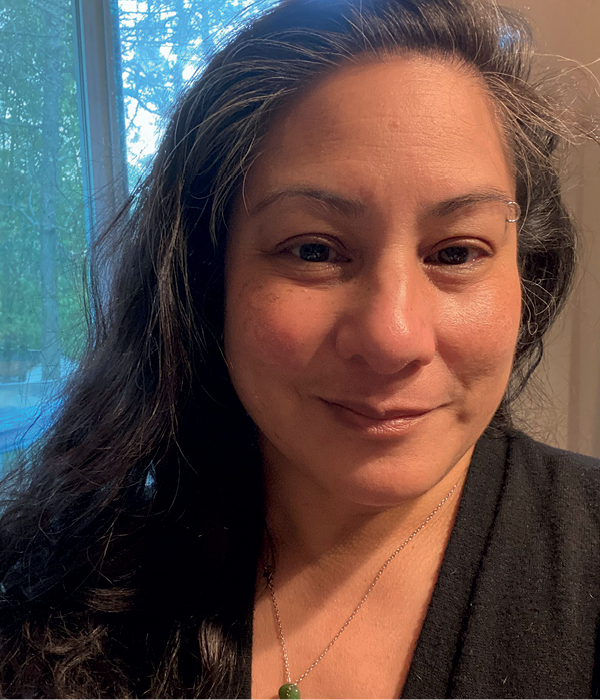 The shift to public health work was initially painful for Lisa Ganser, PhD, a public health emergency planning coordinator in Mower County, Minnesota. “I thought I was making the biggest mistake of my life leaving academia,” Ganser says. But she did so in search of a better work-life balance and found that her work could still be deeply scientific.
Trained for complexity. In her current role, Ganser works on preparedness for drought, flooding, infectious disease and other public health risks. She also does epidemiology, grant writing and community health education and communication for a highly multilingual, culturally diverse county. Her training in academia prepared her well for the rigors of the position. “Being able to translate really complex and sometimes scary information to something that’s usable and accessible is one of my toughest jobs,” she says. “But it’s one that I really like to do.”
Building new muscles. Ganser has had to adapt her communication style to fit public health. She says using data is not enough when the audience isn’t fellow scientists but rather a public that has grown increasingly wary of institutions. The key: finding a shared core value. “Everybody wants to keep their family safe and healthy,” Ganser says. “How are we going to do that together?”
Renewed passion. Though she has missed teaching and the relationships with students, Ganser was surprised to find that life outside academia rekindled her love of physiology. “It wasn’t that the academic work wasn’t cool and satisfying; it was just hard to maintain the grind,” Ganser says. “But now with my love for physiology, physiological research and neuroscience, I get to teach those concepts in a way that’s usable for my community.”
INDUSTRY
At 60 he made the jump and never looked back.
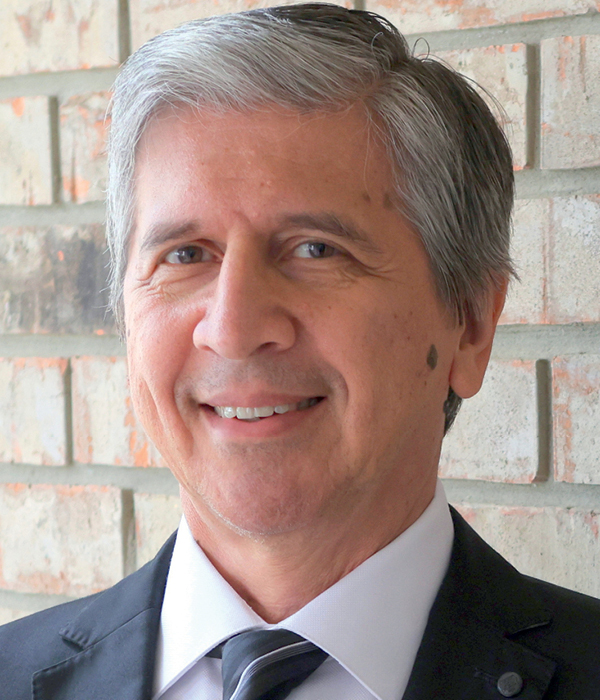 After more than four decades in academia, Ivo Torres Filho, MD, PhD, FAPS, scientific review officer at General Dynamics Information Technology, proved there’s no expiration date on a career change. “I was 60 when I moved, so you can do it at any moment,” he says. Today, he leverages his substantial academic experience supporting government grant review in the private sector.
Look around. Torres Filho says that earlier in his career, moving across sectors was unusual but is more accepted today—perhaps even expected. But he adds that many physiologists are likely not aware of the opportunities that exist. “The key is to investigate the possibilities. There are many opportunities outside academia where you could do your work—you’d be surprised.”
Discovery versus deliverables. One of the biggest differences between academic and non-academic research, he says, is the end goal. For example, in academia he might study how blood flow is distributed or how oxygen reaches cells. In reviewing federal grant applications for the global aerospace and defense company, the question becomes more pragmatic: What can help treat trauma or hemorrhagic shock in the field and be small enough for a soldier to carry? “In academia, the research tends to be more novelty-driven, leading edge,” Torres Filho says. “In the government, you need field-ready solutions.”
Limitations of hyper-focus. The mission-driven emphasis helps both industrial and governmental institutions accomplish their goals and may be suitable for many people, but Torres Filho cautions that this approach may constrict creativity for some. Additionally, the environment itself is naturally populated almost entirely by seasoned professionals, not the newfound curiosity of students and the wide variety of disciplines inherent to a university setting. “In academia, the environment is richer in the sense that you have lectures about other fields all the time,” Torres Filho says. “It’s not worse or better, but it’s really different.”
HOSPITAL
Neither a pure scientist or a pure clinician—and that’s the advantage.
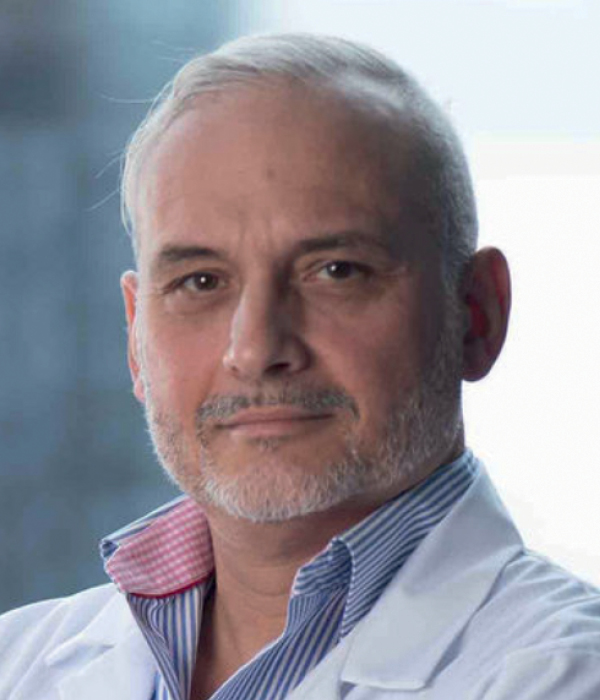 The career path of Mathieu Lemaire, MD, PhD, may look well-planned out, but that’s an illusion, he says. “It looks straight in retrospect, but it is a complete mess,” says Lemaire, a staff physician in the Division of Nephrology and a cell biology scientist at The Hospital for Sick Children (SickKids) in Toronto. “Trainees might see our CVs and assume we knew what we were doing. We didn’t.”
Hybrid role. Lemaire currently splits his time between research and clinical work at SickKids. He also leads KRESCENT, the national kidney research training program for Canada. The multiple responsibilities afford him a unique perspective. “I’m definitely not that strong as a PhD-trained pure physiologist in the physiology part. And I’m not as strong as a pure clinician that does 100% clinical,” he says. “But what I bring to the table is the ability to navigate between the two.” It means he’s as comfortable reading scientific research as he is patient case reports and communicating with both scientists and clinicians. And he’s able to bridge the two disciplines—he can recognize when a clinical case might point to a new disease or when a laboratory model might help answer a patient-centered question.
Seeing the results. Lemaire’s clinical work provides an opportunity that many researchers don’t often have: seeing the real-world consequences of their work. And he’s sharing that experience with others. In training the next generation of kidney researchers through his work with KRESCENT, Lemaire invites patient partners to share their stories. He says the program can be transformative for scientists who may work on kidney disease for years without meeting a patient. “They realize the real impact of their work,” Lemaire says. “We’ve had some of our basic scientists become quite emotional during these sessions.”
Supporting research. While the structure of a hospital and research institution typically allows for protected time for clinician scientists to conduct their research, Lemaire says he was surprised how widely this can vary by geographic region and profession. The practice is less common in Europe than in North America, according to Lemaire. He also notes that research pathways are more established for physicians than for other clinician-scientists, such as nurses, physiotherapists and pharmacists. “Research is highly prized, but the system is not always designed in such a way to give talented people the freedom to deliver what they could deliver.”
MILITARY
A solid foundation in physiology travels well.
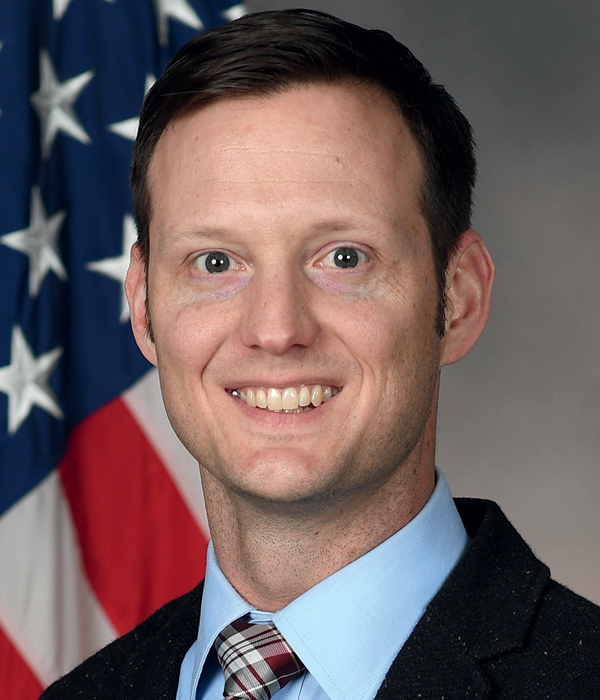 Like with many physiologists working outside academia, the career path for John Harrell, PhD, as a civilian working for the military, was more a function of geography and curiosity than a grand plan. After working in academia for four years, he moved to Dayton, Ohio, near Wright-Patterson Air Force Base, a major hub for aerospace physiology. “Working with an extreme environment, the aerospace environment, and trying to ask and answer some questions for the U.S. Air Force sounded interesting,” says Harrell, a research physiologist for the U.S. Air Force.
Fundamentals transfer. Harrell lacked direct training in aerospace physiology. He says there are very few programs in the country dedicated to the discipline. What he did possess, however, was a strong background in foundational physiology. “A lot of us have backgrounds in exercise physiology,” Harrell says. “But, if you know your foundational physiology, it’s easy enough to apply the aerospace environment to that knowledge.” He says that applies across industries—a solid foundation in physiology is a valuable asset in many specialized fields.
Opening doors. Harrell lends his expertise as co-chair of the APS Careers in Physiology Committee, which promotes interest in careers outside academia and facilitates opportunities for APS members. Harrell says it’s a vital service because physiologists aren’t always aware of the breadth of their career opportunities. “Not everyone wants to go into academia,” Harrell says. “Having a person with inside knowledge of an organization can make the process much easier.”
Funding similarities. It may be assumed that money for military research would be plentiful. Not so, according to Harrell: “You are competing for funding and must be able to effectively communicate the science you’re doing and why it matters. I had no idea what that process would have entailed.” While the funds come from different sources, the process is similar to academic grant writing.
NONPROFIT
Conservation science comes with tradeoffs—and meaning.
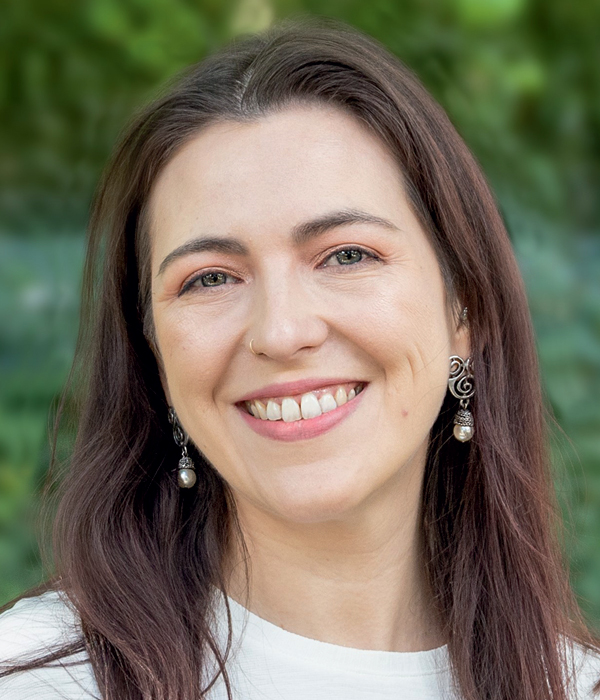 For Carla Madelaire, PhD, a research scientist at the San Diego Zoo Wildlife Alliance, the move from academia was both personal and professional. She sought stability after multiple moves during her academic career, as well as work that was meaningful. Though she hadn’t previously considered working in a nonprofit setting, the opportunity to join the San Diego Zoo as a conservation physiologist checked all her boxes. “What they were offering here in terms of stability, but also allowing me to have a research program, was very attractive,” she says. “And the work is very fulfilling in that its mission is a little bit bigger than just my career.”
Communication is key. Effectively expressing scientific concepts is important for any physiologist, but Madelaire says it’s crucial for success in her role. She is the only physiologist in her environment, collaborating with colleagues who may focus on conservation genetics, animal care, breeding, biobanking or other areas. “Learning to communicate with peers with different scientific and educational backgrounds has been very important for me to thrive in this type of environment.”
Promoting representation. Madelaire has found the nonprofit setting to be much less diverse than the university environment, but she’s trying to help change that. She is chair of the San Diego Zoo Wildlife Alliance’s Women in STEM group and a member of its diversity and inclusion committee. “Whenever I can, I try to perform training, build capacity for underrepresented groups and bring people here from those groups to have an experience with conservation,” Madelaire says.
Sample scarcity. Despite working in a zoo, Madelaire says the process of accessing biological materials is surprisingly complex. The samples are precious—often from endangered species—and the cell collection represents roughly 50 years of work. “There are all sorts of different approvals to have one type of research starting; it’s a whole process. You don’t have a free pass to do whatever you want.”
This article was originally published in the September 2026 issue of The Physiologist Magazine. Copyright © 2026 by the American Physiological Society. Send questions or comments to tphysmag@physiology.org.
Build the Skills for Industry Roles
APS is launching a new multi-part course to help graduate students, postdocs and early-career researchers prepare for careers in biotech and pharma.
The Physiologist Magazine
Read the Latest Issue
Don’t miss out on the latest topics in science and research.
Contact Us
For questions, comments or to share your story ideas, email us or call 301.634.7314.
Scientific Society, Same Science
Several APS staff members hold advanced science degrees and use that training every day to support the research community. We asked three of them: What surprised you most about working outside academia?
“Leaving academia did not mean leaving science behind. My role keeps me connected to the research community through the APS journals and the editors and authors we support.” —Chris England, PhD, director, policy and ethics
“I haven’t stopped using the skills I learned in my doctoral program: critical thinking, deep research and skeptical assessment. The best part is that I’m still contributing to the scientific enterprise through publishing work.” —Audra Cox, PhD, director, publishing operations
“What continues to surprise me is the variety of things I get to work on. Each week is different from the last, and there’s always something to learn.” —Mark Eichelberg, PhD, science policy manager