

From Developmental Biology to Lung Research
Mapping body-brain connections in the lung and other organs could lead to new ways to treat diseases such as asthma or Alzheimer’s.
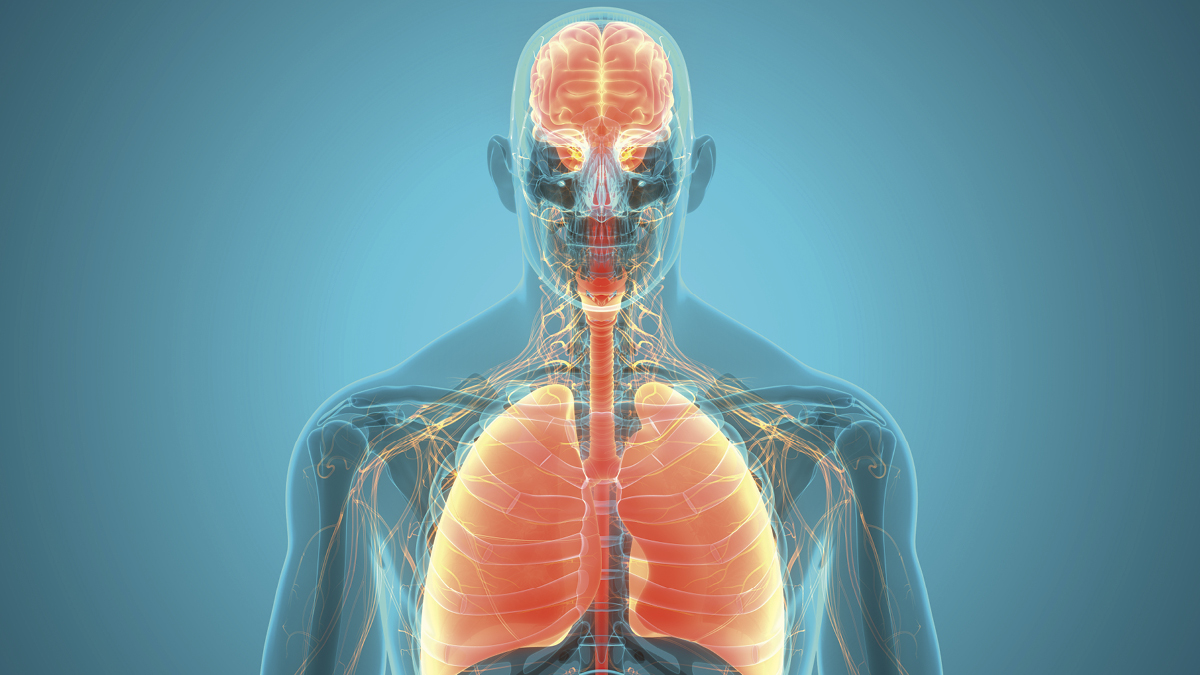
Research into interoception is revealing how the lungs communicate with the brain. Xin Sun, PhD, is a professor in the Department of Pediatrics and the Department of Cell and Developmental Biology at the University of California San Diego. Sun, a Game Changer presenter at the American Physiology Summit in 2026, explains how mapping these neural circuits could lead to new approaches for treating asthma, allergies and other diseases.
How did you become interested in studying the brain-lung connection?
I have taken a non-conventional path. I started in basic Drosophila genetics, then moved into vertebrates, studying growth factor signaling in limb development in the lab of Gail Martin, PhD, at the University of California, San Francisco. When I started my own lab, I wanted to get into research that was more disease-focused. Of my first two graduate students, one stayed in limb development, while the other screened for transcription factors expressed in internal organs. From that screen, we found many genes expressed in the lung, which served as the foundation for the shift of my focus.
The next turning point came when one of my students studied a set of genes that turned out to be expressed in a rare sensory cell type in the lung known as pulmonary neuroendocrine cells. She found that those cells are heavily innervated, which led us to start thinking of the lung as a sensory organ. This gave us an entry point into studying the lung-brain connection and broader interoception.
How does your work relate to interoception?
Although interoception as a term was coined over 120 years ago by British neurophysiologist Charles Sherrington, research looking at brain-body connections has gained momentum in the last 10 years. Our work, together with that of researchers studying other organs, has shown that the brain-body connection dictates a great deal of the body’s physiology.
Very little is known about how signals from the lung are relayed to the brain. Yujuan Su, PhD, a postdoctoral researcher in my lab, mapped the first complete circuit that connects the lung to the brain and back to the lung in response to allergens. This work, which was published in Nature, defines multiple nodes in the circuit.
This circuit is directly involved in asthma, and by mapping the molecular mechanisms between its nodes, we open up new possibilities for using neuromodulation to control asthma. Today’s asthma treatments, especially steroids, come with off-target side effects. Our work opens the possibility that neuromodulation, such as vagal stimulation, could be used to modulate lung response to allergens.
What’s next for your research?
We want to continue to map disease-relevant circuits. Even within asthma, there are more body-brain connections to explore. For example, we’re working to understand the mechanisms that might help explain why many asthma patients suffer from anxiety and stress. Mapping these circuits could help us understand how to use organ modulation to relieve neurological conditions.
Much of our work has been with mouse models, but we are also trying to map connections in human tissues. We have generated a large amount of data from the human lung by utilizing diseased lungs donated by transplant patients. We hope to integrate that information with data that others are generating from the human brain.
What’s the most important thing you’ve learned during your career?
I’ve learned not to settle and to keep pushing scientific boundaries. My transition to lung research was not easy. It was a risk, but it opened an entirely new direction for my career. Moving into lung-brain crosstalk presented another challenge. I had no formal training in that area, so the learning curve was steep. But now we are addressing fundamental questions in this space, which is highly rewarding.
For those considering a new direction, the key is to maintain a foothold in your original field while exploring new opportunities. Preserve that foundation, test the new direction, and once it is established, commit fully and move forward.
What makes your work game changing?
Studying the body-brain connection—not just in the lung, but in all the organs—will uncover novel mechanisms that connect peripheral organ diseases with neurological disorders like Parkinson’s disease and Alzheimer’s disease. Such advancement in fundamental knowledge could lead to new treatments for neurological diseases that are delivered by targeting organs such as the lungs or gut, which would be truly game changing.
What is key to moving the field of interoception forward?
Interoception is still a pretty new field, and many neuroscientists who have traditionally studied the brain are now starting to pay attention to body-brain connections. At the same time, we need more people from classical physiology and organ-focused areas to team up with neuroscientists to push the field forward.
Because interoception spans multiple organs and the brain, it doesn’t fall under a single institute at the National Institutes of Health, making it challenging to identify the right study sections to review and the right institute for funding. To address this, I co-chaired a workshop on lung-brain crosstalk to advocate for the field, support junior investigators and help build the infrastructure. Having the right review process and support in place is essential for any field to grow and thrive. I hope that we can work together to advocate for this game-changing direction of research.
Interview conducted by science writer Nancy D. Lamontagne.
This article was originally published in the September 2026 issue of The Physiologist Magazine. Copyright © 2026 by the American Physiological Society. Send questions or comments to tphysmag@physiology.org.
The Physiologist Magazine
Read the Latest Issue
Don’t miss out on the latest topics in science and research.
Contact Us
For questions, comments or to share your story ideas, email us or call 301.634.7314.