

How Science is Reframing Aging and Disease
A leading aging researcher reflects on how new biological insights are reshaping how we understand aging disease and health across the lifespan.
Luigi Ferrucci, MD, PhD, is scientific director at the National Institute on Aging, part of the National Institutes of Health. As a geriatrician and epidemiologist, he has spent his career probing the root causes of aging-related disease and disability.
What sparked your interest in aging?
Early in life, I had an important encounter by serendipitous chance. This person talked to me about the value of life, and I told him I wanted to do something important, something that has social value. He told me that if you want to do something for others, you need to study aging because aging is already happening, and it’s going to change everything in the world. At that time, people were not thinking about aging because it was a young, post-war period. Now, every time you go to the New York Times, you find an article on longevity or healthy longevity.
I went to medical school, and I became a geriatrician. Eventually, I led a group of geriatricians that were mostly working with older patients after stroke. We were working with a patient for hours, days, sometimes weeks. We would help them to walk again, send them home, and they would be back after a couple of weeks, unable to walk. We had very, very difficult successes that were short-lived.
I went to the London School of Hygiene and Tropical Medicine, where there are fantastic epidemiologists who have been luminaries in the field. They injected in me this idea of being an epidemiologist … and I went to the United States. That is how I switched from being a geriatrician to being an epidemiologist.
How has our understanding of aging changed?
The shift has been conceptual. Medicine is accustomed to thinking in terms of organs—the cardiologist, the urologist, the gynecologist—and they all work separately, and they think that the body is broken into multiple parts. The geriatrician was the one that was pulling all these things together. So, if we could study the mechanisms of aging and slow down aging, we could prevent not just one disease, but many at the same time.
When I came to the National Institute on Aging, I became the director of the Baltimore Longitudinal Study on Aging. As our technical approach improved, we realized that it was difficult to separate disease from aging because the same changes occur in the tissue or molecular level—there was a continuum between aging and disease. Then people started to identify what the mechanisms of aging are, and they called them the hallmarks of aging.
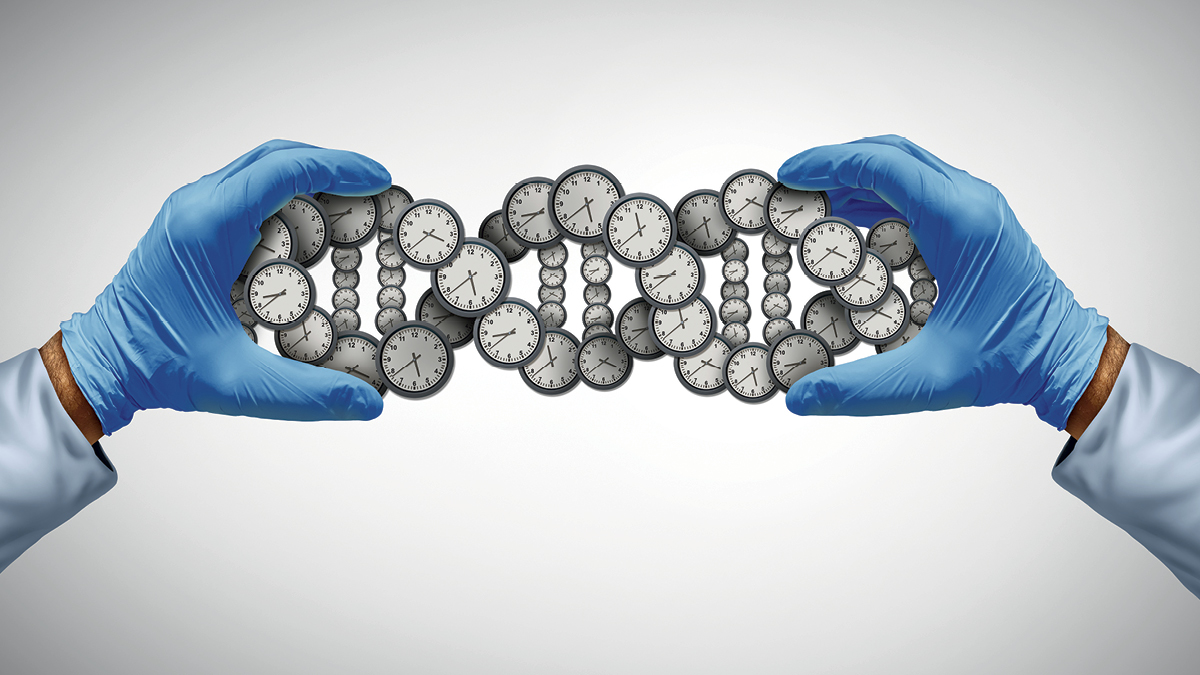
A second inflection point is when Steve Horvath published on the epigenetic clock, which is when you look at specific locations in DNA and their percent methylation, you can derive a number that approximates age beautifully. That was the first time we had a biological clock. It was a revolution. We had the evidence that there was something that was changing systematically with aging.
How have these developments affected views on aging?
People are starting to understand that aging does not occur at age 65. There’s emerging evidence that the quality of your aging has a profound root in your young age. For example, if you are eating junk, that junk doesn’t just disappear—it leaves a kind of echo in your body. That is finally gaining attention, which is important at the population-health level.
More progress needs to be done, for example, to uncover how the stress response mechanism affects our health. But the fact that the topic of aging is present in the media is important. We were kind of hiding from aging, and we don’t do that anymore.
What do you see as exciting opportunities for the field?
One of them is the power of big data. People are creating databases with biological information from millions of people, and these data can be aggregated. New hints of what is causing this decline of physical and cognitive function are emerging, and new targets are emerging. There is enthusiasm for how artificial intelligence can dig into those data and find the biology we don’t know about.
We are only scratching the surface of the complexity of how our organism remains stable in spite of the millions of damages that occur every day. That to me has enormous potential for development and clinical application. For example, maybe we can find aspects of inflammation that can be modulated to optimize the effects on health.
The other thing that is exciting is that we’re witnessing a revolution in microscopy where we can actually see molecules. With cryo-electron microscopy, we can see molecules, and then with other techniques we can see the molecule moving from one place to another within the cell. Where before we were stuck in a static model, we can now understand the dynamics of what’s happening over time.
Interview conducted by science writer Anne Frances Johnson.
This article was originally published in the January 2026 issue of The Physiologist Magazine. Copyright © 2026 by the American Physiological Society. Send questions or comments to tphysmag@physiology.org.
“Aging does not occur at age 65. There’s emerging evidence that the quality of your aging has a profound root in your young age.”
The Physiologist Magazine
Read the Latest Issue
Don’t miss out on the latest topics in science and research.
Contact Us
For questions, comments or to share your story ideas, email us or call 301.634.7314.
Game Changers
Luigi Ferrucci, MD, PhD, was a Game Changer speaker at last year’s American Physiology Summit. Check out the list of 2026 Game Changer topics and the speakers at physiology.org/gamechangers.