

Building a Life in Science Against the Odds
A physiologist reflects on resilience, resourcefulness, and building a successful research career in unconventional and often challenging environments.
By Douglas R. Seals, PhD
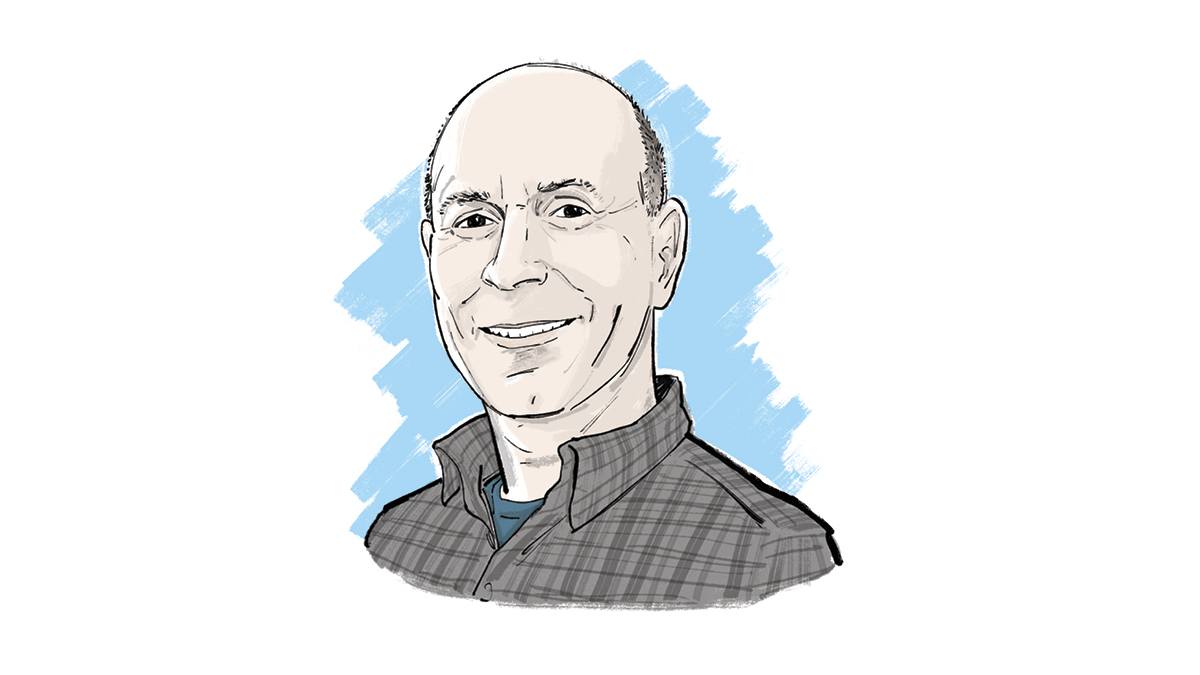
Recently, I found myself reflecting on life and my professional journey. I come from a distinctly non-academic background. My parents had only elementary school educations. No one in my extended family had attended college. Sans romance paperbacks, there were no books in the house, as there was no emphasis on reading. For males in my neighborhood, the career goal was a blue-collar labor job. (I wanted to be a mailman.)
While I chose to attend college, I did so primarily to play football, not for academic reasons. I went on to graduate school, but only to obtain the required master’s degree to teach and coach sports at the small college level. But that’s where I became interested in exercise physiology research and continuing my scientific training.
My original faculty appointments were on undergraduate campuses in departments of exercise science/kinesiology with historically weak research cultures. As was the norm in such settings, I was assigned office and laboratory space in sports arenas or old gyms for the first 35 years of my career.
Working in these environments, I encountered a series of daunting obstacles, including electrical interference from nearby TV satellite trucks (not ideal for neural recordings), regular evictions by security guards clearing the arena for sports events, the absence of core laboratory facilities, consistent flooding of my research area, electrical outages and loss of irreplaceable frozen samples, lack of temperature control, pest infestations, and young children from local swim teams running and screaming through the building.
Despite these unconventional challenges, I have been able to build and sustain a highly successful, continuously funded research program for the past four decades. My program has provided scientific training for over 300 students, fellows and junior faculty.
I cannot explain how this was accomplished. Well over a century ago, German philosopher Friedrich Nietzsche coined the well-known expression “what doesn’t kill you makes you stronger.” Perhaps knowing the limitations of my environment, I worked that much harder.
Lacking contemporary research facilities, I knew I had to be creative. I was not intimidated by the idea of change. Indeed, I felt the need to constantly move forward, ready to pivot as necessary to keep my science competitive and biomedically relevant. I also learned not to expect support from the university. I would obtain what was needed through my own initiative and resourcefulness.
I am not the only physiologist who ever worked out of substandard research facilities in gyms or elsewhere. However, I believe that my story illustrates how an individual can create success from their own intrinsic drive, ideas and inventive spirit. Somewhere along the way, I developed a fierce determination to succeed, coupled with what I’m fond of calling “functional resilience”—overcoming adversity to create sustainable success.
I suppose my experience could be viewed as a sort of “experiment-in-nature,” providing evidence that it’s the person, not their family background, long-held educational aspirations, nor the quality of their working environment, that determines success. I think that’s a valuable point for anyone pursuing big dreams in improbable settings. You, not your environment, are the master of your fate.
Douglas R. Seals, PhD, is a distinguished professor of integrative physiology at the University of Colorado Boulder. His research focuses on cardiovascular aging. He has published a series of professional development articles in APS journals and is the author of a forthcoming memoir, “A Life of Science—in Gyms!”
This article was originally published in the January 2026 issue of The Physiologist Magazine. Copyright © 2026 by the American Physiological Society. Send questions, comments or column ideas to tphysmag@physiology.org.
“I encountered a series of daunting obstacles, including electrical interference from nearby TV satellite trucks (not ideal for neural recordings) and regular evictions by security guards clearing the arena for sports events.”
The Physiologist Magazine
Read the Latest Issue
Don’t miss out on the latest topics in science and research.
Contact Us
For questions, comments or to share your story ideas, email us or call 301.634.7314.