

‘Urine’ Women’s Research?
A PhD student explains how kidney research and sex differences in disease sparked their passion—and how science conversations start at the coffee shop.
By Amanda Suda
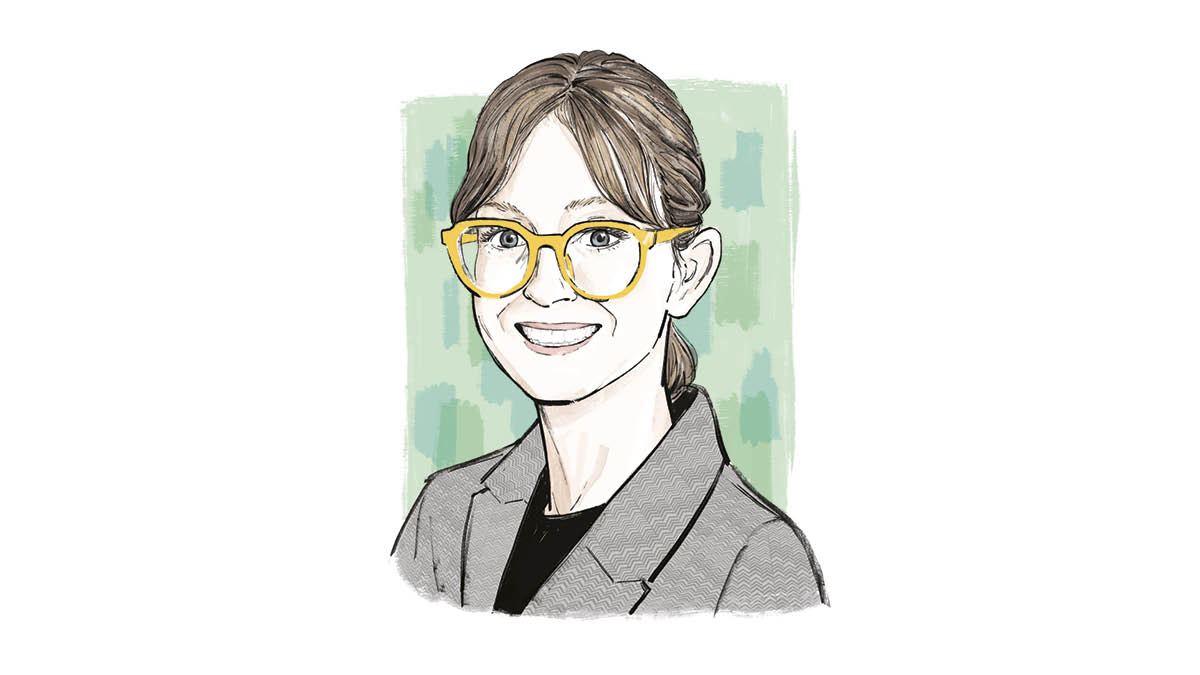
On my way to lab in the morning, I walk to a cafe near my home. “I’ll have a coffee,” I tell the barista. I’m there often enough that the people working there know me. Sometimes a person on the other side of the counter will ask, “Is that a kidney?” as they gesture at the purple lapel pin on my backpack strap. It is. A colleague gifted me a kidney pin when I chose a renal cell biology lab for my doctorate.
“Cool!” the barista will say, excited to identify the abstract organ. Sometimes they also ask, “Why?”
How do I address this question? What they’re asking, perhaps unknowingly, is “What do you do for a living?”
My project focuses on the role of microRNAs and sex differences in renal-epithelial cells during ischemic acute kidney injury. Do I focus on the kidney biology side of my project—assuming they would be able to find enthusiasm in the topic, or at least some understanding, since they identified the organ on my pin?
Throughout most of my education, the kidney was underrated. Would they find the kidney boring? Should I approach with the disease portion of my studies instead? Even minor loss of kidney function can result in systemic complications. Surely, they’ll find that compelling, right?
Or do I give a less science related and, to some, a more controversial answer? Do I talk about the female sex?
“I work in a kidney lab,” I begin, gauging their interest. Maybe they expect me to tell them that I am a kidney donor or receiver. One person told me this was the case.
Usually, I tell them I’m working on my doctorate in integrative systems biology, but that’s not descriptive. So I elaborate: “I research sex differences in the kidney—how males and females are different.” This, I have found, is what catches most people’s interest. Honestly, it’s what caught my interest in biomedicine as well: women in science. Not just women in STEM, but women as the scientific focus. Women as a biological variable.
“Well, are they different?” they ask, curious and genuinely uncertain. This is my cue, not only that they’re willing to give me their time but that they’re interested.
“Yes!” I begin. “The woman’s body has this fantastic way of controlling the immune system, at least in the kidney. With the disease I focus on, women can keep themselves from getting injured and repair themselves better than men—kind of like how with COVID, some people suffered from an overactive immune response, causing a dangerous amount of inflammation and damage to the lungs.”
I continue, “With the disease I study, after being exposed to a stress, the kidney can get further damaged by its own efforts to stop and repair the problem. Women do a better job at reining in some of these responses.”
I add this isn’t for all women or all men and that things change after menopause. “I’m interested in bettering women’s health,” I continue. “Women have been underrepresented in research.”
I tell them the female sex has this inherent ability to fine-tune the immune response in certain organs, and it gets even more impressive when we consider the placenta. We could hijack that biology and create better therapeutics, not just for women, but men as well.
We say our goodbyes, mine with a coffee in one hand. These types of interactions propel my pursuit in becoming a scientist in biomedicine. This fills me with optimism, and I drink my coffee and continue on my way.
Amanda Suda is a 2025 KidneyCure Pre-Doctoral Fellow in the Butterworth Lab and a fifth-year integrative systems biology doctoral candidate at the University of Pittsburgh School of Medicine.
This article was originally published in the September 2025 issue of The Physiologist Magazine. Copyright © 2025 by the American Physiological Society. Send questions, comments or column ideas to tphysmag@physiology.org.
The Physiologist Magazine
Read the Latest Issue
Don’t miss out on the latest topics in science and research.
Contact Us
For questions, comments or to share your story ideas, email us or call 301.634.7314.