

What Running Taught this Researcher About Building a Research Career
Nathaniel Jenkins, PhD, on what running taught him about persistence, mentorship and building a program from scratch.
By Nathaniel Jenkins, PhD
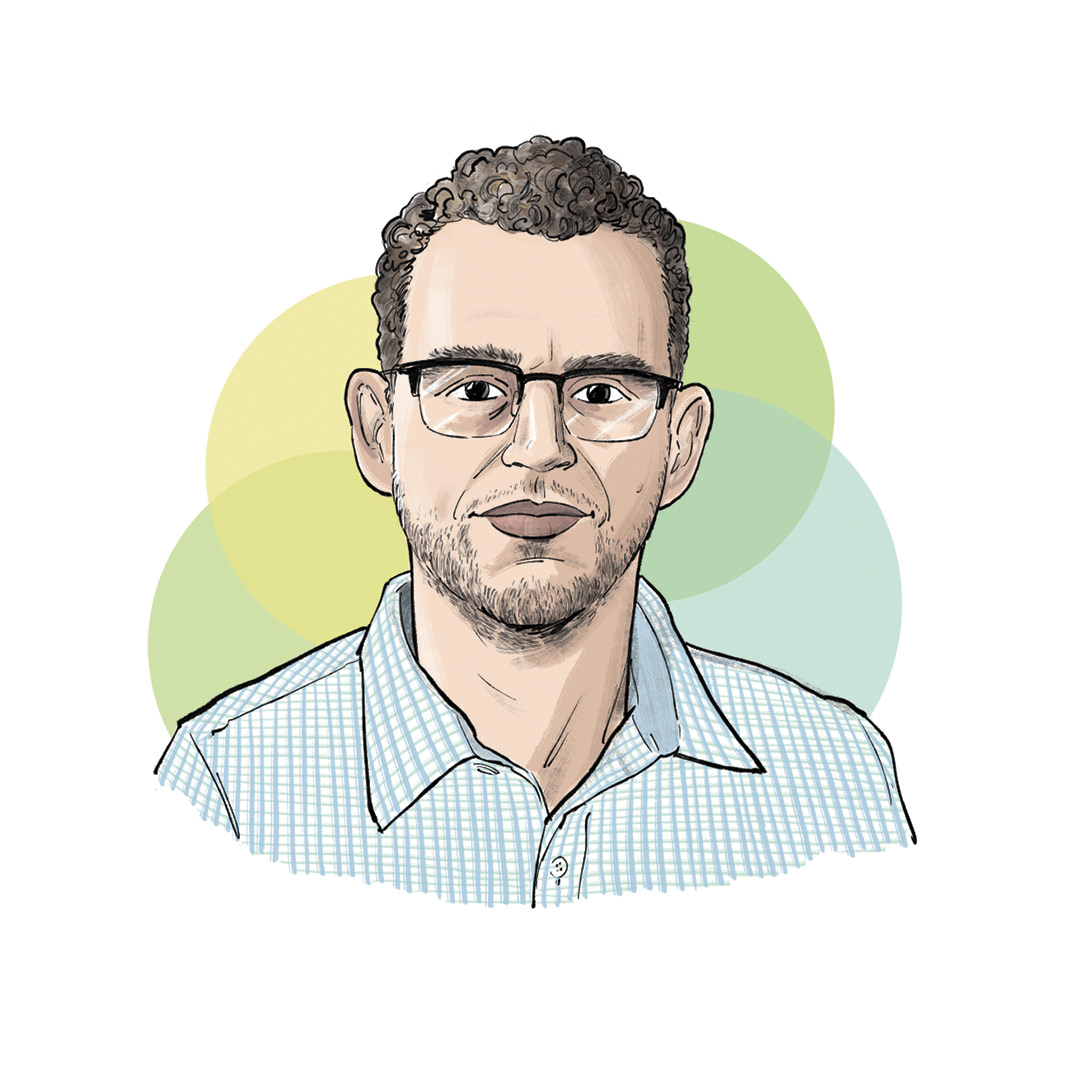
I came to running the same way I came to my current research program: without a road map and with a lot of doubt. I was a baseball player most of my life, and when I hung up the glove, I spent the next 10 years training in the weight room where I was comfortable. Science, meanwhile, I understood through the lens of applied neuromuscular and cardiovascular exercise physiology. I was trained for a particular race, and I knew its course well.
My research pivot came first. In 2018, a pilot grant through a National Institutes of Health Center of Biomedical Research Excellence (COBRE) gave me my foray into early life adversity research. It was a chance to ask questions that plagued me personally about how the body responds to stress, how early adversity embeds biologically to shape cardiovascular risk across a lifetime and whether we can do anything about it in adulthood. But reality was less orderly than the opportunity. I had no formal grant writing training, no postdoc experience to draw from, and no reason to think I belonged in this space except for the belief of COBRE leadership. With their support, I figured it out as I went.
The pivot to running followed in 2021, after a one-mile warmup jog left me humbled and reassessing my fitness. My lab today looks almost nothing like the one I’d originally imagined, and the same is true of my running.
What I’ve learned from both is that the principles are the same. There’s no substitute for showing up. The aerobic base gets built slowly, invisibly, one unremarkable workout at a time. A research program isn’t too different. The major grants, big papers, reputation and impact are not the product of a singular “eureka!” moment. Instead, a program is built by consistent effort, sustained through uncomfortable and humbling periods where the payoff is uncertain. The middle miles can be hard and unglamorous, and perhaps that’s the point.
Any runner understands what it feels like near maximal lactate steady state. It is uncomfortable and will make you doubt yourself, but it is also sustainable. I’ve tried to read discomfort and doubt the same way during my career: conducting interdisciplinary work without a road map, scaling steep learning curves, watching strings of grants go unfunded, and building credibility from scratch while colleagues are hitting their stride. But maybe that discomfort and self-doubt are a sign that you’re close to something worth achieving.
I’ve had a lot of training partners and pacers. These are the mentors who’ve poured into me, the graduate students and postdocs who believed in me and the work before it had publications or funding to justify it, the collaborators who offered expertise I didn’t have, the reviewers who saw ideas worth developing, and my family, who has loved and supported me through it all. Asking people to follow you into territory that isn’t fully mapped isn’t just taking a risk with your own prospects. It is also asking others to take that risk, believing the outcome will be worth it. That weight has made me more deliberate and a better scientist, mentor and person.
So, to those just beginning careers in the physiological sciences, you don’t need to have your route figured out. The course will reveal itself as you run, especially in the middle miles. And if you’re fortunate, you will look to your left and right and realize that you are never out there alone.
Nathaniel Jenkins, PhD, is an associate professor in the Department of Kinesiology and faculty member in the UW Cardiovascular Research Center at the University of Wisconsin-Madison.
This article was originally published in the July 2026 issue of The Physiologist Magazine. Copyright © 2026 by the American Physiological Society. Send questions, comments or column ideas to tphysmag@physiology.org.
The Physiologist Magazine
Read the Latest Issue
Don’t miss out on the latest topics in science and research.
Contact Us
For questions, comments or to share your story ideas, email us or call 301.634.7314.