

A Mentor's Truths About Building a Career in Science
A PhD candidate asks a neuroscience mentor about burnout, academic politics and what mentorship really requires.
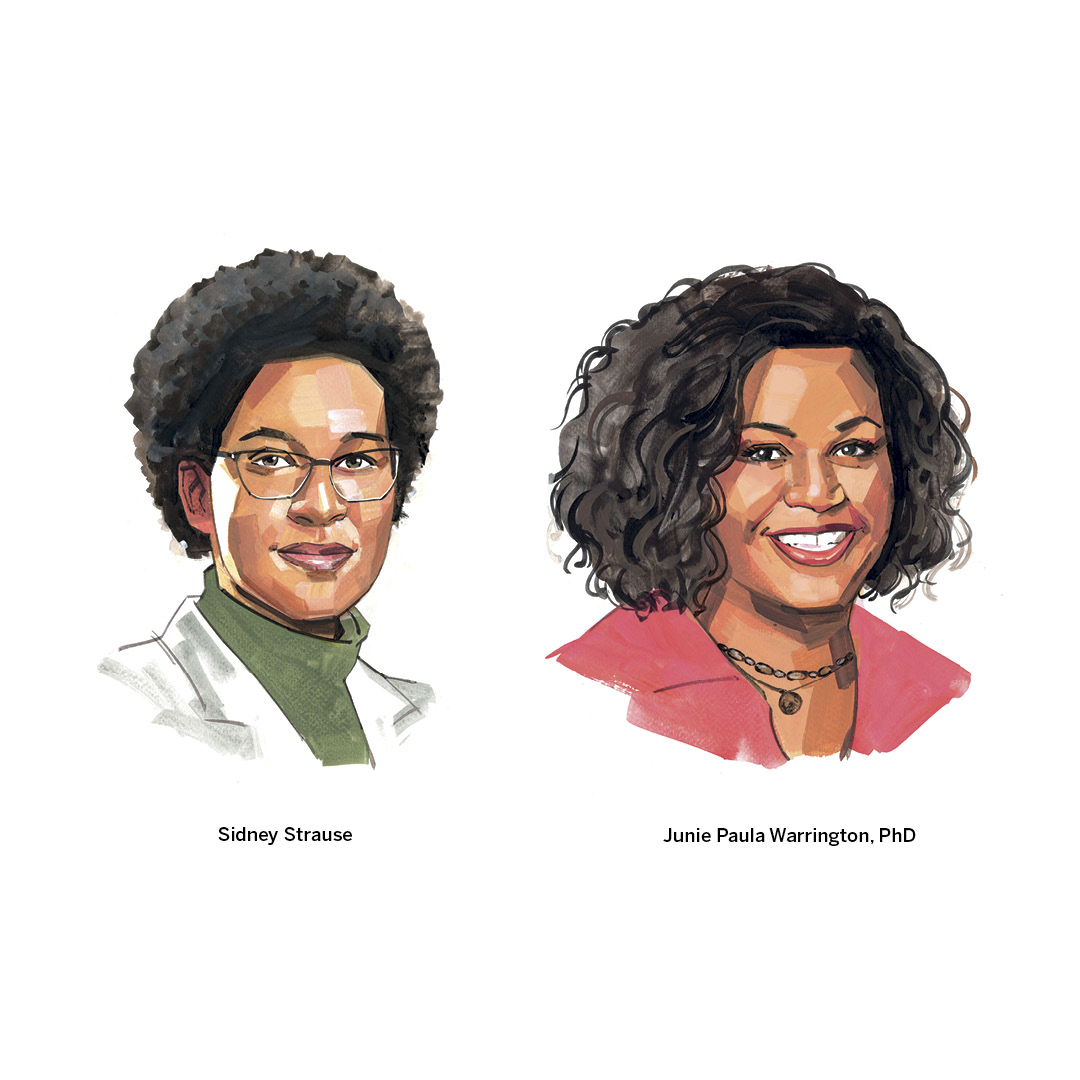
Sidney Strause, a PhD candidate at Marshall University, asks Junie Paula Warrington, PhD, what it takes to succeed in science. Warrington is an associate professor in the Department of Neurology and director of the Program in Neuroscience at the University of Mississippi Medical Center.
Q: How has your definition of success evolved?
A: My definition has not changed much over the years. I have always believed that if I have genuinely done my best, then I have succeeded, regardless of the outcome. That perspective has allowed me to navigate both achievements and setbacks with a consistent sense of purpose. Over time, this definition has expanded to include my mentees’ success. Seeing them grow, gain confidence and reach their goals is deeply meaningful, and I view their success as a reflection of my own. I try to instill the same mindset in them: Success is not just about outcomes or titles, but about effort, integrity and growth.
Q: What do you think trainees misunderstand about building strong mentoring relationships?
A: Trainees often view mentorship as something passively received rather than actively built. Many expect mentors to automatically know their needs or to fill every role without clear communication. In reality, strong mentoring relationships are collaborative and evolve over time. Effective mentorship requires trainees to articulate goals, seek feedback intentionally and follow through. No single mentor can meet every need, which is why building a mentoring network of scientific mentors, career advisers and peer mentors is encouraged. Mentorship works best when expectations are transparent and the relationship is viewed as a shared investment.
Q: What is one piece of advice you would give to trainees navigating uncertainty?
A: Get comfortable making progress without having all the answers. Uncertainty doesn’t mean you are off track; it means you are doing something that matters and evolves. Focus on building skills, relationships and a body of work you are proud of, rather than chasing a perfectly defined endpoint. Careers are rarely linear; mine wasn’t.
Q: How do you manage burnout, and how do you support your trainees through it?
A: I manage burnout by making time for things that ground me and provide perspective, especially my faith. Taking deliberate breaks to reconnect with what matters outside of work helps me maintain balance and sustainability. For my trainees, I focus on creating an environment where they feel supported as whole people. I encourage open conversations about workload and stress and organize activities that foster connection. Burnout thrives in isolation, so my goal is to build community.
Q: What is a hard truth about academic science that you wish was discussed more openly?
A: Merit alone is rarely enough. While rigor, creativity and productivity matter, outcomes are also shaped by academic politics: who advocates for you, who controls resources, how decisions are made behind closed doors, and whose work is perceived as important at a given moment. This can be discouraging, especially for trainees who are taught that excellence will automatically be recognized. Understanding power structures, building genuine professional relationships, and choosing environments with transparent leadership are as critical to success as experimental skill. Ignoring academic politics does not make them disappear; it leaves you unprepared.
Got a career question you'd like to submit? Email it to tphysmag@physiology.org.
This article was originally published in the July 2026 issue of The Physiologist Magazine. Copyright © 2026 by the American Physiological Society.
“Burnout thrives in isolation, so my goal is to build community.”
The Physiologist Magazine
Read the Latest Issue
Don’t miss out on the latest topics in science and research.
Contact Us
For questions, comments or to share your story ideas, email us or call 301.634.7314.