

Advocacy Up Close and Personal
Two APS members share their experience at an APS Capitol Hill event advocating for federal investment in research.
The Inaccessible Becomes Accessible
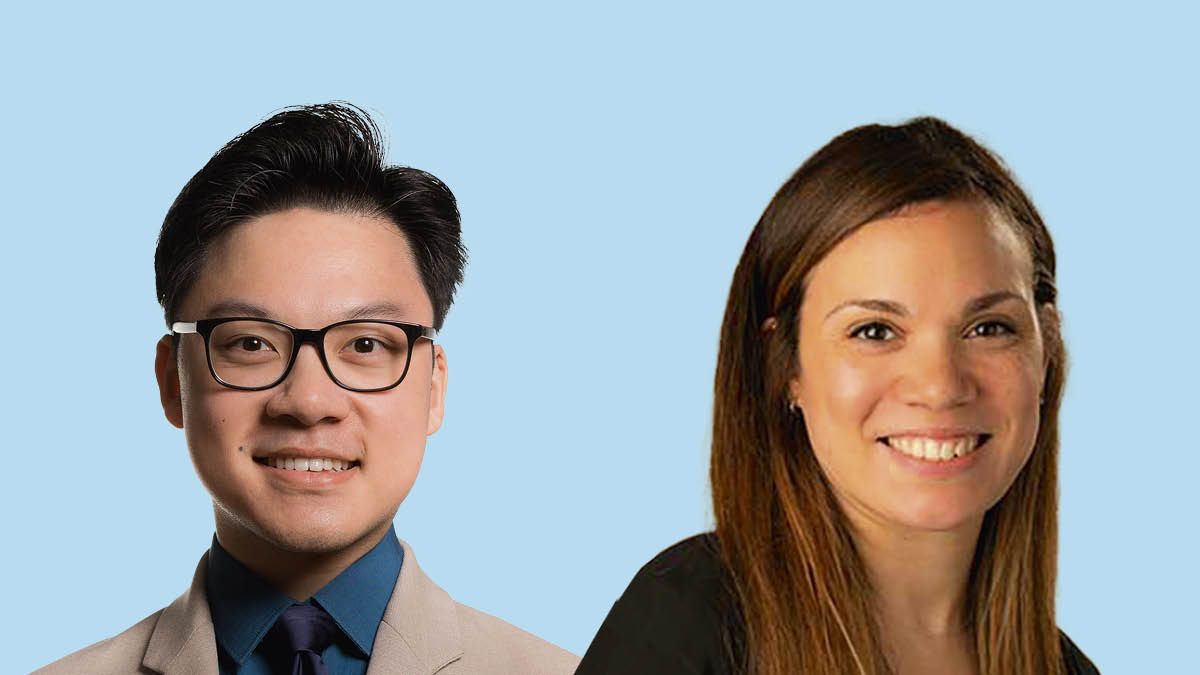
By Viet Dinh
In elementary school, I remember hearing that congressional representatives care about their constituents. We were also told that anyone could become president of the United States, although as we get older, we suspect that isn’t the case.
In April, I got to see for myself how Congress works. I had the opportunity to meet with the staff of my representatives—something I never thought I would be able to do. Life had taught me that the inner workings of the government were inherently inaccessible and that only those born into power and privilege could take part in it. But getting to visit Capitol Hill and meet with Rep. Jasmine Crockett’s staff and talk about research funding taught me I was wrong. This isn’t an exclusive club that we aren’t invited to. Despite how unreachable these legislators may feel, it is imperative that we the people voice our concerns if we want real, systemic change to happen.
It was a deeply meaningful learning experience. Just like we scientists need stronger advocacy, it made me consider that maybe we as scientists need to be more welcoming to the non-scientific community.
Viet Dinh is a PhD candidate in integrative physiology at University of North Texas Health Fort Worth.
Make Science Policy Personal
By Karla Haack, PhD
I met with staff from both Republican and Democrat offices from my home state. I was nervous but remembered an Audre Lorde quote: “Becoming always vigilant for the smallest opportunity to make a genuine change … is learning to address each other’s difference with respect.” I was given this opportunity; how was I going to connect despite those differences?
I opened the conversation in my representative’s office on shared interests and leveraged that to talk about how science funding does not just impact labs. Their follow-up questions highlighted a clear difference of opinion, so I returned to our shared investment in the problem. My goal was to explain why solutions not typically voted for by my representative were equally effective.
Other representatives’ staff were already supportive, but it was still an opportunity to reinforce the importance of science funding. I shared that having worked in both academia and industry has allowed me to see firsthand that funding basic science is a necessary first step to drug discovery and approval. Centering policy discussions on the people affected facilitates more thoughtful engagement across the aisle.
Every scientist has a unique experience to draw from to make a personal connection. Participating in a Hill Day was a fantastic opportunity to do something at a time in which so much feels out of my control. I recommend it for anyone looking to engage.
Karla Haack, PhD, is a senior medical writer at Merck.
Send questions or comments to tphysmag@physiology.org.
This article was originally published in the September 2025 issue of The Physiologist Magazine. Copyright © 2025 by the American Physiological Society.
The Physiologist Magazine
Read the Latest Issue
Don’t miss out on the latest topics in science and research.
Contact Us
For questions, comments or to share your story ideas, email us or call 301.634.7314.