

From Cycling to the Lab: How One Physiologist Found His Mission
Turning a childhood passion into a physiology career focused on exercise performance, recovery and musculoskeletal health.
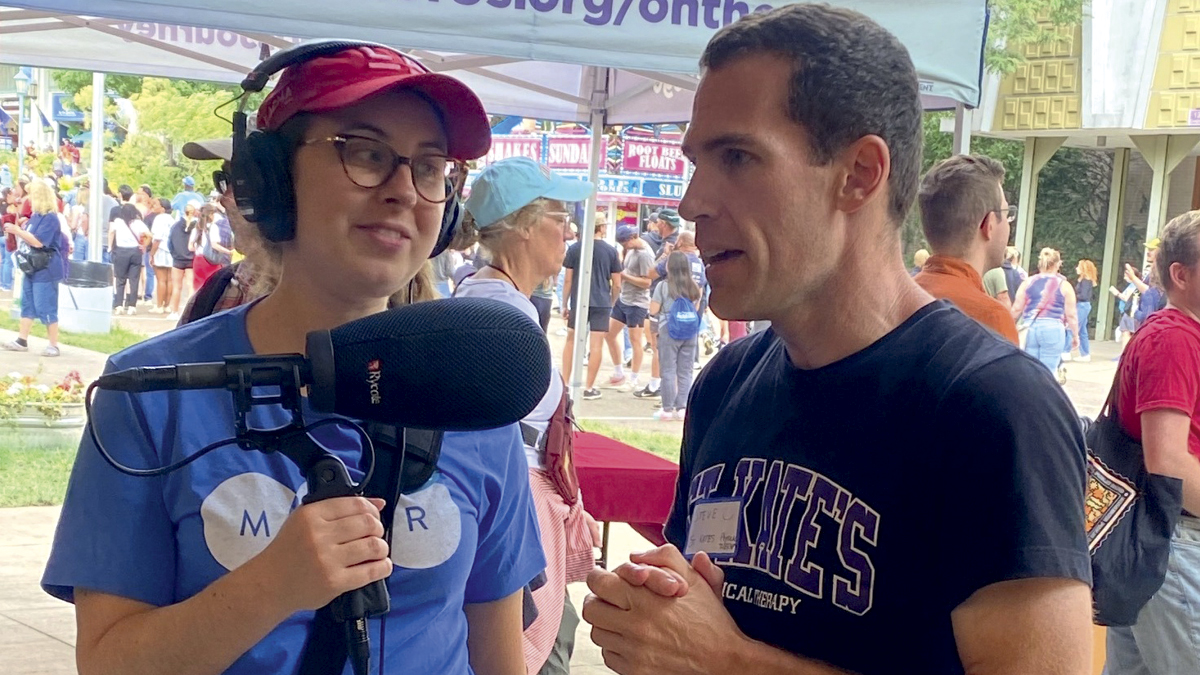
Steven Elmer, PhD, is an associate professor in the Doctor of Physical Therapy Program at St. Catherine University in St. Paul, Minnesota. His research goals include finding better ways to restore musculoskeletal function, maintain health, and improve performance in healthy and clinical populations. Elmer engages in K–12 outreach and advocacy to support biomedical research.
FROM BIKE TO BENCH. One of my favorite activities as a kid was riding my bike. While I played many different organized sports, I was better at endurance sports so I kept riding my bike. My passion for human health was inspired through my love for cycling, desire to train better and numerous sport-related injuries I sustained. In college, I took courses in human biomechanics and theory of exercise training and planning. From there, I volunteered in the Neuromuscular Function Laboratory, where I started to assist graduate students with their research. I started to see how my interests in sport, health and science could align. My mom encouraged me to pick something I love and make it part of my career.
SPECTACULAR FAIL. During my master’s thesis, I spent several months carefully setting up my exercise model, calibrating equipment and piloting the experimental protocol. For my formal thesis experiment, I was so excited that I invited my entire committee to visit the laboratory on the first day of my data collection. While testing the first few subjects, two key pieces of laboratory exercise equipment failed spectacularly—right in front of a committee member who happened to be the dean of the College of Health. Quickly I learned about the element of surprise in research, fixed the equipment and kept the project moving. For years to come my thesis adviser found tiny ball bearings on the floor from my mishap.
TIME TRAVEL MEETUP. As a huge “Back to the Future” fan, I would love to meet Doc Brown! Using his time machine, I would go back to the late 1800s and visit Fridtjof Nansen, a scientist, polar explorer, diplomat and humanitarian. I appreciate how Nansen leveraged his athletic abilities and passion for science to produce new knowledge in a variety of fields, including neurology and oceanography. His book “The First Crossing of Greenland” is one of my favorites. I also admire his public service and humanitarian efforts to help refugees after World War I, which earned him the Nobel Peace Prize in 1922.
VARIETY: THE SPICE OF SCIENCE. The best part about my job is the variety of things I get to do every day, week and month. One minute I am team-teaching in the classroom, and the next I am conducting research in the laboratory or field. In between, I am mentoring students, preparing manuscripts for publication and securing funding to support our research. I also enjoy the opportunities to lead new initiatives, collaborate with experts around the world, engage with K–12 students and educators, and advocate for health science. There is truly never a dull moment.
SCHOLARS AND TEACHERS. I often emphasize that research and teaching are truly integrated. To be a good researcher you must be able to teach and communicate your findings to a range of audiences that includes both scientists and nonscientists. To be a good teacher you have to keep up on the literature, think outside the box, try new things and write about it to share what has worked and not worked so well.
Do you know someone we should meet? Email us at tphysmag@physiology.org.
This article was originally published in the May 2026 issue of The Physiologist Magazine. Copyright © 2026 by the American Physiological Society.
The Physiologist Magazine
Read the Latest Issue
Don’t miss out on the latest topics in science and research.
Contact Us
For questions, comments or to share your story ideas, email us or call 301.634.7314.