

Far from Finished
This researcher advances women’s health research while exploring the many mysteries physiology has yet to solve.
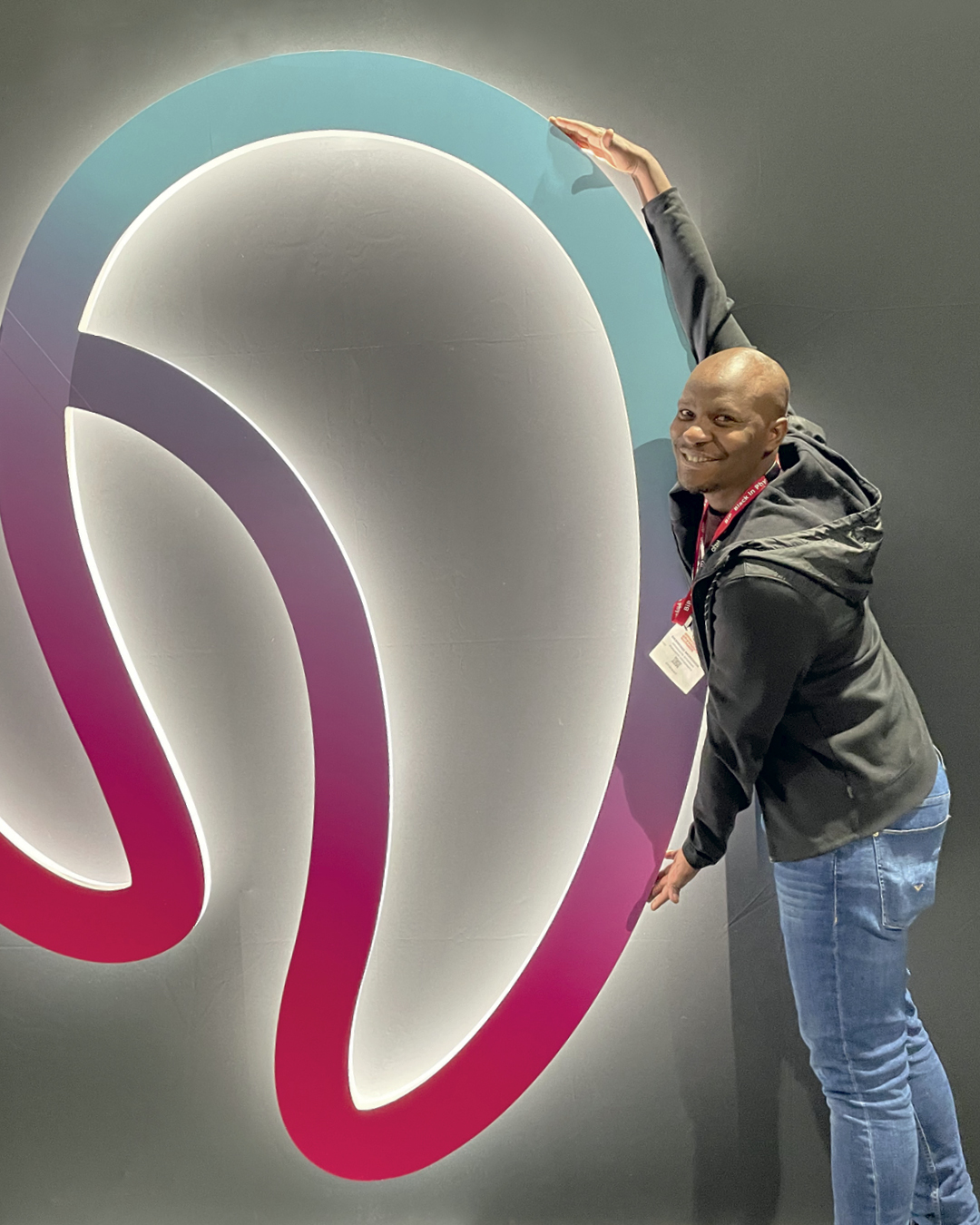
Desmond Moronge, PhD, is a postdoctoral fellow at the Medical College of Georgia at Augusta University. He is a cardio-renal physiologist who is committed to improving renal health in women across the lifespan, an area that has historically been understudied and underfunded. Moronge has a longstanding interest in the mechanisms regulating cardiovascular and renal function in females.
CURIOSITY SPARKED. When I was working as a pharmacist in Kenya after earning my bachelor of pharmacy degree from Kenyatta University, I thought pharmacology and toxicology were mainly about discovering new drugs. But performing basic research and studying biological pathways sparked my curiosity about how the body works and how understanding disease mechanisms can lead to better treatment.
ANATOMY GONE AWRY. My first time doing wire myography, I confidently isolated what I thought was the aorta, only to realize it was the esophagus. It was a humbling (and hilarious) reminder that science is full of learning curves. Thankfully, I can tell them apart now!
HYPERTENSION HERO. I would have liked to have met Lewis K. Dahl. His pioneering work linking salt intake to hypertension transformed our understanding of cardiovascular disease. I would love to hear how he developed his ideas and handled skepticism and what he envisioned for the future of hypertension research.
THRILL OF DISCOVERY. My favorite part of my job is the thrill of finally getting an experiment to work and discovering something no one knew before. I also enjoy mentoring students and brainstorming new ideas with colleagues.
OLD MEETS NEW. I think a common misconception about physiology is that it’s mostly “old knowledge” that’s already been figured out. The field is constantly evolving. We’re still uncovering new pathways, revising what we thought we knew and discovering how complex systems really work. Physiology is a very active, question-driven field.
Do you know someone we should meet? Email us at tphysmag@physiology.org.
This article was originally published in the September 2026 issue of The Physiologist Magazine. Copyright © 2026 by the American Physiological Society.
The Physiologist Magazine
Read the Latest Issue
Don’t miss out on the latest topics in science and research.
Contact Us
For questions, comments or to share your story ideas, email us or call 301.634.7314.