

This Neuroscientist Wants Everyone to Understand Science
Lindsey Ramirez, PhD, studies alcohol aversion in the brain and believes scientists have a responsibility to make their work understandable.
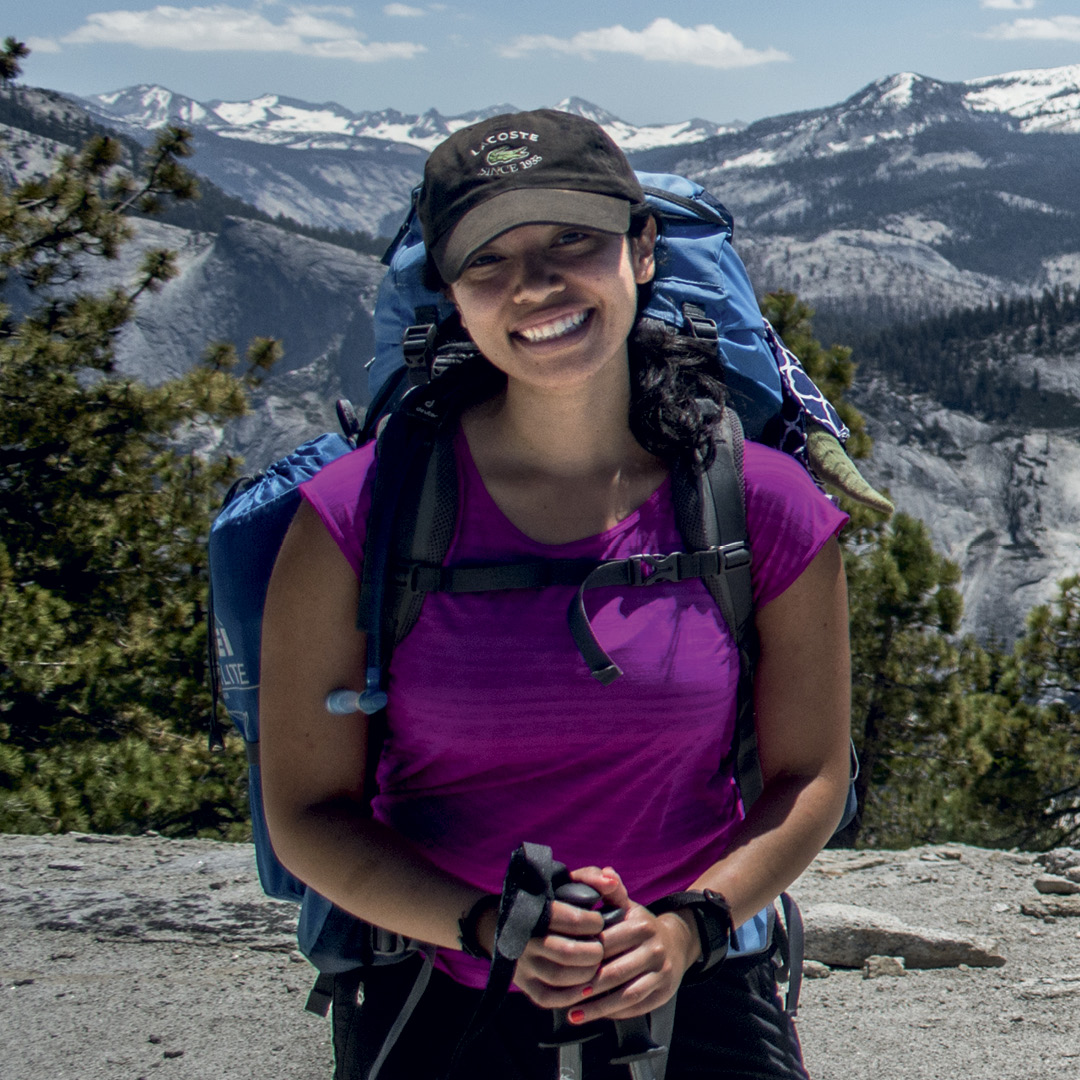
Lindsey A. Ramirez, PhD, is a postdoctoral scientist at the University of Illinois Chicago and a former Porter Physiology Development Fellow. She investigates the areas in the brain that signal aversion to alcohol in the hopes of understanding the reason for individual differences in this behavior. Here she talks about her passion for blogging and creating videos to make science more accessible and appealing.
Television to test tubes. As a little kid, I always had a curiosity to learn about the world around me. I participated in all the science fairs I could and meticulously conducted experiments in middle school and high school. As I took more biology and chemistry classes, I realized how much there was to learn about the world—and most of it was microscopic. I eventually learned that being a scientist was a career and that scientists were working to solve the world’s biggest problems. I wanted to help solve those problems; I wanted to help people.
Fire alarm fiasco. As a PhD student, I needed a way to tell rat pups apart. I used a nontoxic marker and drew an “O” on the females and an “X” on the males. I used a black marker for the control group and a red one for the experimental group. One day I was weighing the pups and the fire alarm went off. I panicked—if I didn’t finish weighing the pups, I’d lose that datapoint in my experiment, and I wouldn’t know which unmarked pups belonged to the control or experimental group. A few of my lab mates helped me finish weighing, and I made an executive decision to just mark the pups’ backs with a big swatch of black or red—I could determine the sex later. We sprinted out of the building. The next day, I found the rat mom, who was normally white, was completely pink! In the rush to get all the pups marked during the fire alarm, we used more marker than usual. Through grooming and playing with the pups, some of that color transferred to her fur! Despite her temporary change in hair color, she and the pups were OK.
Trust through transparency. Vanessa Sun is an up-and-coming scientist. She started documenting her journey in STEM when she was an undergraduate, continued as she completed her master’s at MIT, and now during her PhD in atmospheric science. She posts on social media about her lab work and shares when things don’t go as planned. Instead of dwelling on the problems, she shows her determination and moves forward. Her content is approachable and relatable. I admire her ability to build trust with her community by being transparent. This is something all scientists should strive to do so we can reach people from all backgrounds and ignite their curiosity in science.
Curiosity and connection. I have an innate curiosity about the world, and attending lab meetings, conferences and seminars allows me to keep learning. I have learned a variety of lab techniques that I never thought I would: how to measure blood pressure and body composition, and computer coding and constructing fiber optic cables. I have gained so much knowledge, and sharing that to help others get through tough times and realize their true potential is extremely rewarding.
Complex collaboration. Many people think that a lot of the problems in physiology are solved since the field has been around for a long time. My physiology coursework made me realize how interconnected organ systems throughout the body are, and it makes research in this field complicated. Where one treatment may help one organ, it may poison another organ. In addition, a disease can vary depending on age, sex and environmental factors. So, research in physiology is not so straightforward and requires a lot of effort and collaboration.
Do you know someone we should meet? Email us at tphysmag@physiology.org.
This article was originally published in the July 2026 issue of The Physiologist Magazine. Copyright © 2026 by the American Physiological Society.
The Physiologist Magazine
Read the Latest Issue
Don’t miss out on the latest topics in science and research.
Contact Us
For questions, comments or to share your story ideas, email us or call 301.634.7314.