Meet the 2026 Game Changers
The eight game-changer sessions at the American Physiology Summit feature some of the biggest topics impacting life and health today. Top scientists from around the world will come together to present these vital issues. All sessions are in the Minneapolis Convention Center and are CDT.

Resilience Through Exercise | Interoception | Chronic Pain | Regeneration | Central Nervous System | Mitochondrial Function | Human Fertility | Digital Twins
Redefining Resilience Through Exercise Science
Explore how exercise influences the physiological tipping points between stress resistance and resilience. This session examines the feedback loops and redundancies that drive recovery, cognitive health and physical function, particularly in aging. Benjamin Miller, PhD, FAPS, and Jennifer Steiner, PhD, are the session chairs.
Friday, April 24
10–11:30 a.m.
Room L100 F
Speakers
 Henriette van Praag, PhD
Florida Atlantic University

Alan A. Cohen, PhD
Columbia University
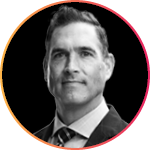 Nathan K. LeBrasseur, PhD
Mayo Clinic
The Sixth Sense: Examining Interoception
Moving beyond the five senses, this session explores the science of interoception—the body's internal sensing system. Learn how the brain monitors the heart, gut, lungs and other organs, revealing new insights into interorgan communication and physiological control. Michael Caplan, MD, PhD, FAPS, is the session chair.
Friday, April 24
10–11:30 a.m.
Room 200 H
Speakers
 Xin Sun, PhD
University of California San Diego
 Rui Chang, PhD
Yale School of Medicine
 Zachary Knight, PhD
University of California, San Francisco and Howard Hughes Medical Institute
Unraveling Chronic Pain
Chronic pain is a persistent and complex condition with high personal and societal costs. This session spotlights emerging research on the pathophysiology of chronic pain, highlighting neuro-inflammatory processes and how sensory, neural and glial components could unlock therapeutic breakthroughs. Willis K. “Rick” Samson, PhD, FAPS, is the session chair.
Friday, April 24
10–11:30 a.m.
Room M100 H
Speakers

Daniela Salvemini, PhD
Saint Louis University
 Arkady Khoutorsky, DVM, PhD
McGill University, Canada
Regeneration Reimagined
From flatworms to organoids, regenerative biology and medicine are reshaping what's possible. This session explores how model organisms restore lost function, why regeneration fails in some systems, and how stem cell technology help restore damaged or failing organs. Gordon Mitchell, PhD, FAPS, and Kate Hamilton, PhD, are the session chairs.
Friday, April 24
10–11:30 a.m.
Room L100 J
Speakers
 Todd A. Castoe, PhD
University of Texas Arlington
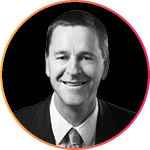 Clive Niels Svendsen, PhD
Cedars-Sinai Medical Center
Charting the Central Nervous System
New tools are transforming the ability to map, image and manipulate the nervous system. This session highlights cutting-edge approaches—from spatial omics to advanced brain imaging and neural stimulation—that are reshaping the understanding of central nervous system function in health and disease. Gordon Mitchell, PhD, FAPS, and Kate Hamilton, PhD, are the session chairs.
Saturday, April 25
10–11:30 a.m.
Room L100 F
Speakers
 Sean Deoni, PhD
Wyeth Nutrition Science Center
 Elizabeth K. Neumann, PhD
University of California, Davis
New Frontiers in Mitochondrial Function and Dysfunction
New research is reshaping our understanding of mitochondrial function. This session explores emerging insights on mitochondrial specialization, stress response and the potential of mitochondrial transplantation as a novel therapeutic strategy, opening new frontiers in metabolism and disease treatment. Wolfgang Kuebler, MD, FAPS, and Karthik Suresh, MD, are the session chairs.
Saturday, April 25
10–11:30 a.m.
Room 200 H
Speakers
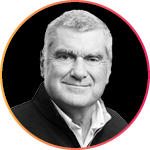
Craig B. Thompson, MD
Memorial Sloan Kettering Cancer Center
 Brian Glancy, PhD
National Institutes of Health
 Åsa Gustafsson, PhD
University of California San Diego
Are We an Endangered Species? Rethinking Human Fertility Through Physiology
Human fertility is declining, and the physiological causes are complex. This session dives into the biology of human reproduction across the lifespan, and how hormones, immune signals, environmental exposure and function shape fertility and long-term health. Dennis Brown, PhD, FAPS, and Denise Cornelius, PhD, are the session chairs.
Saturday, April 25
10–11:30 a.m.
Room M100 H
Speakers
 Teresa K. Woodruff, PhD
Michigan State University
 Michael J. Soares, PhD
University of Kansas
 Christopher Barratt, PhD, DSc
University of Dundee, Scotland
Digital Twins in Human Physiology
Can a person's physiology be digitally simulated to predict health outcomes? This session explores how using real-time physiological data from wearables and medical devices brings us closer to our "digital twins," and building simulations that can transform treatment decisions and improve health. Robert Hester, PhD, FAPS, is the session chair and Mark Palmer, MD, PhD, is the moderator.
Saturday, April 25
10–11:30 a.m.
Room L100 J
Speakers

Liesbet Geris, PhD
University of Liège and KU Leuven, Belgium
 Kevin Sack, PhD
Medtronic
 John C. Clemmer, PhD
University of Mississippi Medical Center
Summit Menu
- Abstract Rules
- Abstract Revision and Withdrawal Policy
- Abstract Topic Categories
- Award Lectures
- Awards
- Career Day Workshop
- Dates and Deadlines
- From Concept to Classroom
- Game Changers
- Keynote Speaker, Opening—Tracy L. Bale, PhD, FAAAS
- Keynote Speaker, Closing—Jennifer Lippincott-Schwartz, PhD, FBS, FRMS, FASCB
- Mobile App
- PhysioHub
- Poster Information
- Pre-Summit Events
- Program
- Registration
- Schedule At-A-Glance
- Section Banquet Tickets
- Social Events
- Speaker Audiovisual Instructions
Getting and Staying There
About the Summit
Industry Partners
- Industry Partner Workshops at the Summit
- Visit Our Industry Partners at the Summit
- Partner With Us
- Exhibitor Rules & Regulations