

- Membership & Community
-
Publications & News
- Physiology Journals
-
Newsroom
-
The Physiologist Magazine
- 2019
- 2020
- 2021
- 2022
- 2023
- 2024
-
In Depth
- In Depth—The Bear Necessities
- In Depth: Understanding Circadian Rhythms
- In Depth: Understanding Data
- In Depth: Exercise Physiology: Take Your Medicine at the Gym
- In Depth: Neurodegenerative Disorders
- Imaging Methods Unveil the Invisible
- Rewiring the Brain: Breakthroughs in Neural Therapy
- What’s Coming Next for GLP-1 and Metabolic Disease Treatment
- Understanding the Effects of Maternal Exercise
- How Muscles May Hold Cues to Better Sleep
- The Science Behind Breathwork and Mental Health
- How Science is Reframing Aging and Disease
- How Exercise Supports Brain Health Across the Lifespan
- What Snake Physiology Reveals About Gut Healing and Diabetes
- Mapping Multiple Diseases with One Imaging Tool
- How Brain-Lung Connections Could Change Disease Treatment
-
Mentoring Forum
- Net Worth
- Take Care
- You … In Charge
- Work. It. Out.
- Working Off-site
- Location, Location, Location?
- Student Support
- Progressing to Postdoc
- Relationship Building
- Let’s Get It Started
- What Do We Value?
- It’s a Postdoc Life
- Coronavirus Contributions
- Creative Communications
- Selection Process
- Conference Connections
- Postdoc Appreciation
- Research Rewards
- Focus on Teaching
- Industry Insights
- Balance Beam
- Post Postdoc
- If You Build It
- Talk It Through
- Forward Bound
- I’ve Earned My PhD. Now What?
- University Life
- Tips for Trainees
- Time Travel
- Prepare Now for the Career You Want
- Landing a Postdoctoral Researcher Position
- Becoming a Physician-Scientist
- Mastering the Art of Science Communication
- Setting Yourself Up for Success in the Lab
- From Postdoc to Professor: Key Strategies for Success
- How to Stay Motivated in Challenging Times
- Staying Motivated Throughout Your Science Career
- Managing Stress and Workload During Your PhD
- Stay Passionate About Your Physiology Career
- Advice for Science Trainees in Uncertain Times
- What Career Success Looks Like for Scientists Today
- How to Build a Successful Academic Career in Physiology
- A Mentor's Truths About Building a Career in Science
- How to Choose Meaningful Research Questions
-
Policy IQ
- Policy IQ—2023 in Review: How APS Advocated on Behalf of Physiologists
- Policy IQ—Supporting Equitable Research
- NIH's Road Map to a Better Postdoc Experience
- The Career Path to Science Advocacy
- Culture of Safety: Stopping Sexual Misconduct
- Physiologists Return to Capitol Hill
- Tips for Scientists to Communicate about Animal Research
- Science Advocacy in a New Political Landscape
- Tips for Making the Call to Congress
- Science Spending Is an Investment
- Advocacy Up Close and Personal
- How Animal Research Advances Physiology and Medicine
- 5 Ways Physiologists Advocated for Science in a Challenging Year
- How Federal Grantmaking Is Reshaping Research Funding
- Federal Science Funding: Where Things Stand and What Comes Next
- How Physiologists Can Shape NIH Funding and Policy
- What Researchers Need to Know About Indirect Costs
-
Publish with Polish
- Publish with Polish
- The Layers of Open Science
- Take Your Content From Meeting to Manuscript
- APS Journals to Highlight Women’s Health Research
- What Subscribe to Open Means for APS Members
- The 5 Pillars of Publish with Purpose
- 3 Types of Metadata Researchers Should Know About
- Navigating Open Access and New Licensing Options
- Journal Manuscript Prep Made Easy
- How to Navigate Public Access Requirements
- Ensuring Public Trust in Publishing
- Improve Your Scientific Figures With APS and BioRender
- How APS Subscribe to Open Supports Accessible Research
- Meet APS Publications at the Summit
- How APS Is Making Physiology Research Open Access
- What Authors Need to Know About APS' New Submission System
- Credit Where It’s Due
-
Under the Microscope
- Equine Inspiration
- Inquiring Minds
- The Power of Teaching
- The Love of Physiology
- Understanding Women's Physiology Across the Lifespan
- Studying Human Health in Extreme Environments
- Advancing Kidney Health and Physiology Research
- How Gut Microbes Shape Blood Pressure and Drug Response
- Battling Malaria
- Exploring the Microbiome
- From Physics to Physiology: A Scientist's Unconventional Journey
- Finding Meaning in Exercise Physiology and Healthy Aging
- From Classroom Curiosity to Scientific Discovery
- From Cycling to the Lab: How One Physiologist Found His Mission
- This Neuroscientist Wants Everyone to Understand Science
- Kidney Health, Research and Discovery
- Mentoring Q&A
- Evolution
- 2025
- 2026
- Find Us on Social Media
-
The Physiologist Magazine
-
Professional Development
-
Meetings & Events
-
American Physiology Summit
- Abstracts
- Awards at the Summit
- Award Lectures
- Dates and Deadlines
- Hotel Information
- International Travel Information for Summit Attendees
- American Physiology Summit PhysioHub
- Summit FAQs
- Travel & Transportation
- Industry Partners
- Scientific Integrity Policy
- Exhibitor Registration Form
- 2027 American Physiology Summit Keynote Speakers
- Control of Renal Function in Health and Disease
- Comparative Physiology Conference
- Signals and Systems: Interorgan Communication in Health and Disease Conference
- Integrative Physiology of Exercise Conference
- Webinars
- Future APS Conferences
- Conference Policies
-
American Physiology Summit
- APS Awards
-
Career & Professional Development
-
Career Gateway
-
Resources
- Transcript—Leading Through Conflict and Difficult Conversations
- Transcript—Managing Conflict with Colleagues
- Transcript—Leading a Team Through Conflict
- Transcript—Providing Difficult Feedback
- Transcript—Team Dynamics and Culture Primer
- Transcript—Building a Team
- Transcript—Leading a Team Assigned to You
- Transcript—Creating a Team Culture
-
Resources
- Careers in Physiology
- Center for Physiology Education
- Virtual Courses
- From Academia to Industry: Prepare for Careers in Biotech and Pharma
- Physiology Job Board
- APS Graduate Physiology & Biomedical Science Catalog
-
Career Gateway
-
Meetings & Events
-
Advocacy & Resources
- Science Policy
-
Resources
- Researcher Resources
- Educator Resources
- Trainee Resources
- Student Resources
-
APS Graduate Physiology & Biomedical Science Catalog
- Des Moines University
- George Washington University
- New York Medical College
- Pennsylvania State University
- Texas A&M University
- Texas A&M University Medical Physiology
- University of Alabama at Birmingham
- University at Buffalo
- University of Colorado
- University of Michigan
- University of Minnesota
- University of Missouri-Pathobiology and Integrative Biomedical Sciences
- University of Nebraska Medical Center
- University of Nevada, Reno
- University of South Carolina School of Medicine
- University of Tennessee Health Science Center (UTHSC)
- University of Texas Health Science Center
- Virginia Commonwealth University
- Wayne State University
- Boston University
- University of Oregon
- Career Gateway
- Major Initiatives
- About APS
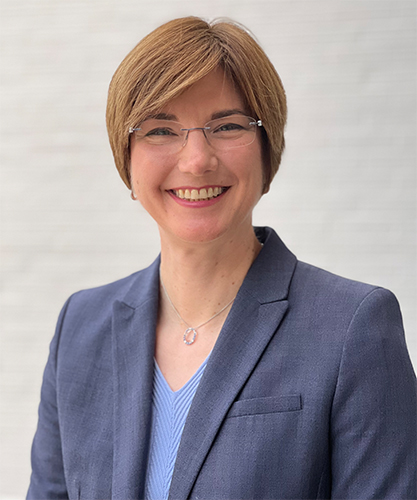
Rockville, Md.—The American Physiological Society (APS) has named Erika Shugart, PhD, FAAAS, as its next chief executive officer, effective March 9. Shugart, a trained biologist, STEM advocate and leader in the association community, succeeds former CEO Scott Steen, who retired earlier this year.
Shugart brings more than two decades of leadership experience from across scientific societies and nonprofit organizations. Most recently, she served as CEO of the National Science Teaching Association and the American Society for Cell Biology. Widely recognized for her leadership in science communication, Shugart has also held senior roles at the American Society for Microbiology, the Marian Koshland Science Museum of the National Academies, and the National Academy of Sciences.
A Fellow of the American Association for the Advancement of Science (FAAAS), Shugart earned her PhD in biology from the University of Virginia.
“I am excited to join APS and build on the legacy of contributions the organization has made to society,” Shugart says. “Physiology is the foundational science for understanding life and health, and I can’t think of a more important charge than championing exceptional research, creating an inclusive home for all life scientists, and advocating for increased support and recognition of the discipline. I look forward to partnering with the APS staff, volunteer leaders and members as we advance the Society’s mission together.”
“Erika brings an impressive combination of scientific training, strategic leadership, and experience leading complex member-driven societies,” says incoming APS President Sue Bodine PhD, FAPS, FIUPS. “Throughout the search process, it was clear her background in scientific publishing, financial stewardship, and policy and advocacy position her to lead APS at this moment. We are excited to welcome her and confident in her ability to guide the Society forward during a consequential time for science.”
NOTE TO JOURNALISTS: To schedule an interview, please contact APS Media Relations or call 301.634.7314. Find more information in our Newsroom.
Physiology reveals how life works—from cells to body systems—and drives the scientific discoveries that transform health and save lives. It provides the foundation every medical advancement depends on. The American Physiological Society champions physiology—the science life depends on. It connects a global, multidisciplinary community of more than 10,000 biomedical scientists and educators as part of its mission to advance scientific discovery, understand life and improve health. The Society drives collaboration and spotlights scientific discoveries through its 16 scholarly journals and programming that support researchers and educators in their work.
Related Content
- Mary E. Brunkow, Fred Ramsdell, Shimon Sakaguchi Named 2025 Nobel Laureates in Physiology or Medicine
- APS Members Elect New Leaders for 2026–2027
- Good News for Astronauts: Arteries Remain Normal Years After Long-duration Spaceflight
- American Physiological Society to Assume Publishing Operations for Function in 2026
- Yoga May Help Relieve Irritable Bowel Syndrome Symptoms
- Why Working Out Hungover in the Heat May Be Risky
- Find Us on Social Media
 Media Inquiries
Contact the Communications Department to:
- Interview a scientific expert.
- Request a study or journal article.
- Get background and resources on physiology.
Email communications@physiology.org or call 301.634.7314.