- Membership & Community
-
Publications & News
- Physiology Journals
-
Newsroom
-
The Physiologist Magazine
- 2019
- 2020
- 2021
- 2022
- 2023
- 2024
-
In Depth
- In Depth—The Bear Necessities
- In Depth: Understanding Circadian Rhythms
- In Depth: Understanding Data
- In Depth: Exercise Physiology: Take Your Medicine at the Gym
- In Depth: Neurodegenerative Disorders
- Imaging Methods Unveil the Invisible
- Rewiring the Brain: Breakthroughs in Neural Therapy
- What’s Coming Next for GLP-1 and Metabolic Disease Treatment
- Understanding the Effects of Maternal Exercise
- How Muscles May Hold Cues to Better Sleep
- The Science Behind Breathwork and Mental Health
- How Science is Reframing Aging and Disease
- How Exercise Supports Brain Health Across the Lifespan
-
Mentoring Forum
- Net Worth
- Take Care
- You … In Charge
- Work. It. Out.
- Working Off-site
- Location, Location, Location?
- Student Support
- Progressing to Postdoc
- Relationship Building
- Let’s Get It Started
- What Do We Value?
- It’s a Postdoc Life
- Coronavirus Contributions
- Creative Communications
- Selection Process
- Conference Connections
- Postdoc Appreciation
- Research Rewards
- Focus on Teaching
- Industry Insights
- Balance Beam
- Post Postdoc
- If You Build It
- Talk It Through
- Forward Bound
- I’ve Earned My PhD. Now What?
- University Life
- Tips for Trainees
- Time Travel
- Prepare Now for the Career You Want
- Landing a Postdoctoral Researcher Position
- Becoming a Physician-Scientist
- Mastering the Art of Science Communication
- Setting Yourself Up for Success in the Lab
- From Postdoc to Professor: Key Strategies for Success
- How to Stay Motivated in Challenging Times
- Staying Motivated Throughout Your Science Career
- Managing Stress and Workload During Your PhD
- Stay Passionate About Your Physiology Career
- Advice for Science Trainees in Uncertain Times
- What Career Success Looks Like for Scientists Today
-
Policy IQ
- Policy IQ—2023 in Review: How APS Advocated on Behalf of Physiologists
- Policy IQ—Supporting Equitable Research
- NIH's Road Map to a Better Postdoc Experience
- The Career Path to Science Advocacy
- Culture of Safety: Stopping Sexual Misconduct
- Physiologists Return to Capitol Hill
- Tips for Scientists to Communicate about Animal Research
- Science Advocacy in a New Political Landscape
- Tips for Making the Call to Congress
- Science Spending Is an Investment
- Advocacy Up Close and Personal
- How Animal Research Advances Physiology and Medicine
- 5 Ways Physiologists Advocated for Science in a Challenging Year
- How Federal Grantmaking Is Reshaping Research Funding
-
Publish with Polish
- Publish with Polish
- The Layers of Open Science
- Take Your Content From Meeting to Manuscript
- APS Journals to Highlight Women’s Health Research
- What Subscribe to Open Means for APS Members
- The 5 Pillars of Publish with Purpose
- 3 Types of Metadata Researchers Should Know About
- Navigating Open Access and New Licensing Options
- Journal Manuscript Prep Made Easy
- How to Navigate Public Access Requirements
- Ensuring Public Trust in Publishing
- Improve Your Scientific Figures With APS and BioRender
- How APS Subscribe to Open Supports Accessible Research
- Meet APS Publications at the Summit
-
Under the Microscope
- Equine Inspiration
- Inquiring Minds
- The Power of Teaching
- The Love of Physiology
- Understanding Women's Physiology Across the Lifespan
- Studying Human Health in Extreme Environments
- Advancing Kidney Health and Physiology Research
- How Gut Microbes Shape Blood Pressure and Drug Response
- Battling Malaria
- Exploring the Microbiome
- From Physics to Physiology: A Scientist's Unconventional Journey
- Finding Meaning in Exercise Physiology and Healthy Aging
- From Classroom Curiosity to Scientific Discovery
- Mentoring Q&A
- Evolution
- Baseline by Scott Steen, CAE, FASAE
- 2025
- 2026
- Find Us on Social Media
-
The Physiologist Magazine
-
Professional Development
-
Meetings & Events
-
American Physiology Summit
- #APS2024 Overview
- Abstracts
- Awards at the Summit
- Award Lectures
- Career Networking Lunch Form
- Dates and Deadlines
- Hotel Information
- International Travel Information for Summit Attendees
- Industry Partners
- Mobile App
- Physical Poster Information
- American Physiology Summit PhysioHub
- Pre-Summit Events
- Registration
- Section & Group Banquet Tickets
- Social Events
- Speaker Audiovisual Instructions
- Summit FAQs
- Travel & Transportation
- Undergraduate Program Book
- Liability Waiver
- Joseph Erlanger: Pioneering Nerve Research and APS Leadership
- Scientific Integrity Policy
- Exhibitor Registration Form
- Keynote Speaker Tracy L. Bale, PhD
- Keynote Speaker Jennifer Lippincott-Schwartz, PhD
- Career Day Workshop: Own Your Path, Positioning for the Career That Fits You
- Summit Status and Safety Update
- From Concept to Classroom
- Control of Renal Function in Health and Disease
- Comparative Physiology Conference
- Signals and Systems: Interorgan Communication in Health and Disease Conference
- Webinars
- Future APS Conferences
- Conference Policies
-
American Physiology Summit
- APS Awards
-
Career & Professional Development
-
Career Gateway
-
Resources
- Transcript—Leading Through Conflict and Difficult Conversations
- Transcript—Managing Conflict with Colleagues
- Transcript—Leading a Team Through Conflict
- Transcript—Providing Difficult Feedback
- Transcript—Team Dynamics and Culture Primer
- Transcript—Building a Team
- Transcript—Leading a Team Assigned to You
- Transcript—Creating a Team Culture
-
Resources
- Career Navigator
- Center for Physiology Education
- Virtual Courses
- Physiology Job Board
- APS Graduate Physiology & Biomedical Science Catalog
-
Career Gateway
-
Meetings & Events
-
Advocacy & Resources
- Science Policy
-
Resources
- Researcher Resources
- Educator Resources
- Trainee Resources
- Student Resources
-
APS Graduate Physiology & Biomedical Science Catalog
- Des Moines University
- George Washington University
- New York Medical College
- Pennsylvania State University
- Texas A&M University
- Texas A&M University Medical Physiology
- University of Alabama at Birmingham
- University at Buffalo
- University of Colorado
- University of Michigan
- University of Minnesota
- University of Missouri-Pathobiology and Integrative Biomedical Sciences
- University of Nebraska Medical Center
- University of Nevada, Reno
- University of South Carolina School of Medicine
- University of Tennessee Health Science Center (UTHSC)
- University of Texas Health Science Center
- Virginia Commonwealth University
- Wayne State University
- Physiology Department Catalog Submission Form
- Boston University
- Career Gateway
- Major Initiatives
- About APS
- Nonmembers
- $0.00
- Members
- $0.00
How Basic and Translational Research are Paving the Way to Improved Health
 The American Physiological Society (APS) and InsideScientific are pleased to announce a joint webinar series focused on late-breaking research and discovery relating to the physiological mechanisms of obesity, cardiometabolic processes and obesity-related disease. The series will include a number of live webinars focused on top science being conducted by leading obesity researchers from around the world. Technology and methodology webinars highlighting laboratory innovations and fundamental methods of studying the physiology central to obesity research and related health risks will also be featured.
Explore a special collection of research articles relating to the physiological mechanisms of obesity, cardiometabolic processes and obesity-related disease selected from APS’ 16 peer-reviewed journals.
Past Webinars
Brain Circuits Driving Appetite - Now Available On Demand
Lora Heisler, PhD, University of Aberdeen, Scotland
June 10, 2020
11 a.m. EDT
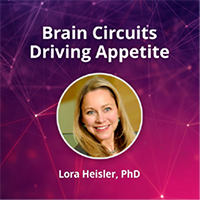 In many Western countries, nearly a quarter of the population meet the criteria for clinical obesity and more than half are overweight. This is a medical concern because obesity is a serious risk factor for many major chronic illnesses, such as heart disease, type 2 diabetes and cancer. As a result, obesity is associated with reduced lifespan by almost a decade. The rapid escalation in the prevalence of obesity and the lack of sufficient obesity medications underscores the necessity of understanding the basic neurobiology underlying body weight.
During this webinar, Lora Heisler, PhD, will discuss why for many people is it so difficult to lose weight and yet all too easy to gain those extra pounds. She will also discuss the brain circuitry that is the master controller of body weight, such as circuits activated by the fat hormone leptin. Heisler will review how our genes impact our waistline and will discuss genes in the melanocortin system and how obesity medications capitalize on this basic neurobiology to trick the brain into feeling fuller faster and shedding pounds. Finally, Heisler will review new weight loss drugs on the horizon that may be able to help those who are struggling to lose weight through diet and exercise alone.
Utilizing Stable Isotope Tracers in Preclinical Models of Obesity - Now Available On Demand
Marshall D. McCue, PhD, Sable Systems International, Nevada
June 17, 2020
11 a.m. EDT
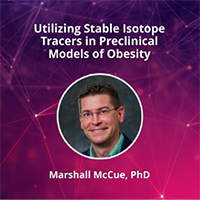 Stable isotope analysis is a powerful tool for obesity research. Nutrients labeled with these tracers are nontoxic to animal models and can be continuously tracked in vivo. In this webinar, Marshall McCue, PhD, will review stable isotope biochemistry, standard nomenclature, unit conversions and simple calculations. In addition, he will present case studies highlighting the use of novel laser-based stable isotope approaches to track 13C-labeled nutrient oxidation second-by-second in real-time. McCue will discuss how dietary (exogenous) and stored (endogenous) nutrients can be traced to identify several research questions, including how to tell if your animal is snacking on cached food and how do experimental manipulations alter oxidation of stored lipids.
Calories, Carbs or Quality? What Matters Most for Body Weight - Now Available On Demand
Kevin Hall, PhD, National Institute of Diabetes and Digestive, and Kidney Diseases (NIDDK), Maryland
June 24, 2020
11 a.m. EDT
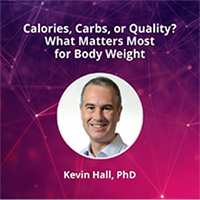 Eating fat makes you fat. No, eating carbs makes you fat. Actually, it’s a simple equation relating calories in and calories out. Such endless debates about presumed dietary culprits or cures for obesity have led to widespread public confusion and mistrust in nutrition science. But what is the truth? In this presentation, Kevin Hall, PhD, will discuss the physiology of body weight regulation and how we adapt to various changes in diet. The total calories we consume, eating carbs versus fat and differences in diet quality—which varies with the amounts of “ultra-processed” foods we consumer—will be discussed.
Heterogeneity and Crosstalk of Human Brown Adipose Tissue - Now Available On Demand
Camilla Schéele, PhD, Novo Nordisk Foundation Center for Basic Metabolic Research in Copenhagen, Denmark
Christian Wolfrum, PhD, ETH Zürich in the Department of Health Science and Technology in Zürich, Switzerland
July 22, 2020
11 a.m. EDT
 Adipose tissues contain lipid-filled adipocytes but are also composed of several other cell types including adipogenic progenitors, endothelial cells, immune cells and neuronal cells. Brown adipose tissue (BAT) contains thermogenic adipocytes which produce heat in response to cold, an energy-consuming process. Today, it is well established that adipose tissue function is highly dependent on the plasticity of the tissue due to the interaction of different cell types present within the tissue. In addition, the function of adipose tissue is controlled by secreted factors, called adipokines or batokines. Some of these cytokines affect nearby cells within the adipose tissue while others are secreted into the circulation for communication at the organ level.
In this exclusive live webinar, Camilla Schéele and Christian Wolfrum will discuss broader aspects of brown adipose tissue and share late-breaking research relating to the role of BAT in whole body metabolic regulation.
Cravings and Weightlifting Squats: Technologies that Explore New Metabolic and Behavioral Research - Now Available On Demand
Zhen Yan, PhD, University of Virginia, Charlottesville, Virginia
Diego Bohorquez, PhD, Duke University, Durham, North Carolina
September 2, 2020
11 a.m. EDT
 In this webinar, Yan will discuss the mechanisms underlying adaptation to resistance exercise and Bohorquez will describe the role of neuropods and how nutrient sensing in the gut affects behavior.
Mitochondrial Membrane Lipids and Respiratory Efficiency - Now Available On Demand
Katsu Funai, PhD, University of Utah, Salt Lake City
September 16, 2020
11 a.m. EDT
 During this exclusive live webinar, Katsu Funai, PhD, will discuss how lipid composition of the inner mitochondrial membrane (IMM) modulates ETS efficiency to alter propensities for metabolic diseases. Specifically, he will share how his team is utilizing a sophisticated mitochondrial diagnostics platform to systematically examine the role of IMM lipids on the efficiency of each of the energy transfer processes of mitochondrial oxidative phosphorylation. In addition, he will review methodology and share findings of tissue-specific gain- or loss-of-function studies and discuss the role of these experiments in assessing metabolic health.
Animal Model Selection, Study Design and Current Trends in Preclinical Obesity Research
Fred Beasley, PhD, Crown Bioscience
September 30, 2020
11 a.m. EDT
 During this presentation, Fred Beasley, PhD, will give a broad-level overview of the factors to consider when deciding on an appropriate preclinical rodent model for studying obesity and its treatments. It will feature an overview of trends in obesity and associated illnesses, and the role of pharmacological intervention. Beasley will discuss criteria for establishing a study’s aims and review commonly used rodent models obesity, addressing both genetically inherited and diet-induced animal models. The webinar will conclude with additional considerations for improving your study design.
Anti-obesity Pharmacotherapy: Where Are We Now? Where Are We Going?
Ania Jastreboff, MD, PhD, Yale School of Medicine
October 22, 2020
11 a.m. EDT
 Obesity is a treatable chronic disease. With nearly 2 billion individuals worldwide classified as being overweight and 650 million as having obesity, it is critical to optimize implementation of existing treatment interventions and develop novel therapies to mitigate the obesity pandemic. Anti-obesity medications are one of the essential tools in our medical toolbox to help patients achieve their health and weight goals.
In this webinar, Jastreboff will discuss current use of anti-obesity pharmacotherapy, mechanisms involved, and agents in various stages of development with considerations for next steps. The presentation aims to inspire development of innovative therapeutics while optimizing use of existing agents to address the urgent need to effectively and sustainable treat millions of individuals with obesity around the world.
Key topics will include:
- understand the role of anti-obesity pharmacotherapy in the treatment of obesity,
- describing current anti-obesity pharmacotherapy, and
- discussing anti-obesity medications under development.
Why Is Bariatric Surgery So Effective?
Lee M. Kaplan, MD, PhD, Massachusetts General Hospital and Harvard Medical School
December 2, 2020
11 a.m. EST
Bariatric surgery is one of the most effective treatments for obesity in adults. Unlike many drugs prescribed to treat obesity, bariatric surgery has a broad range of effects, including physiological impact on the gastrointestinal tract and gut microbiota. In this final installment of our Obesity 2020 webinar series, Lee Kaplan, MD, PhD, will discuss late-breaking research about the role of the gastrointestinal tract and gut microbiota in obesity. He will also review various physiological mechanisms of action of bariatric and metabolic surgery and how they affect the regulation of energy balance and metabolic function.
 Lee M. Kaplan, MD, PhD, is director of the Obesity, Metabolism, and Nutrition Institute and founding director of the Weight Center at Massachusetts General Hospital (MGH) in Boston and associate professor of medicine at Harvard Medical School (HMS), Boston. Kaplan is director of the subspecialty fellowship program in Obesity Medicine and Nutrition at MGH, director of the Blackburn Course in Obesity Medicine at Harvard Medical School, chair of the U.S. Obesity Medicine Fellowship Council and associate director of the National Institutes of Health (NIH)-sponsored Nutrition and Obesity Research Center at Harvard. He has served in many professional leadership roles and is the immediate past president of The Obesity Society. Kaplan has served in several advisory roles to the U.S. National Institutes of Health, including most recently as a member of the Advisory Council of the National Institute of Diabetes and Digestive and Kidney Diseases, a member of the Clinical Obesity Research Panel and a member of the Center for Scientific Metabolism Review Advisory Panel. He has served on the editorial boards of several scientific and medical journals and is a member of several governmental, foundation and corporate scientific advisory boards.
Kaplan graduated from Harvard University in Cambridge, Massachusetts, and received his MD and PhD in molecular biology from the Albert Einstein College of Medicine in New York. He completed an internship and residency in internal medicine and a fellowship in gastroenterology at MGH and HMS and a fellowship in genetics at Brigham and Women’s Hospital in Boston. He is a board-certified specialist in internal medicine, gastroenterology and obesity medicine, and has authored more than 200 peer-reviewed medical and scientific papers.